Self Guided ToursSesimbra & Arrábida
On foot · 1 hr · 1.6 km · easy

Sesimbra Castle

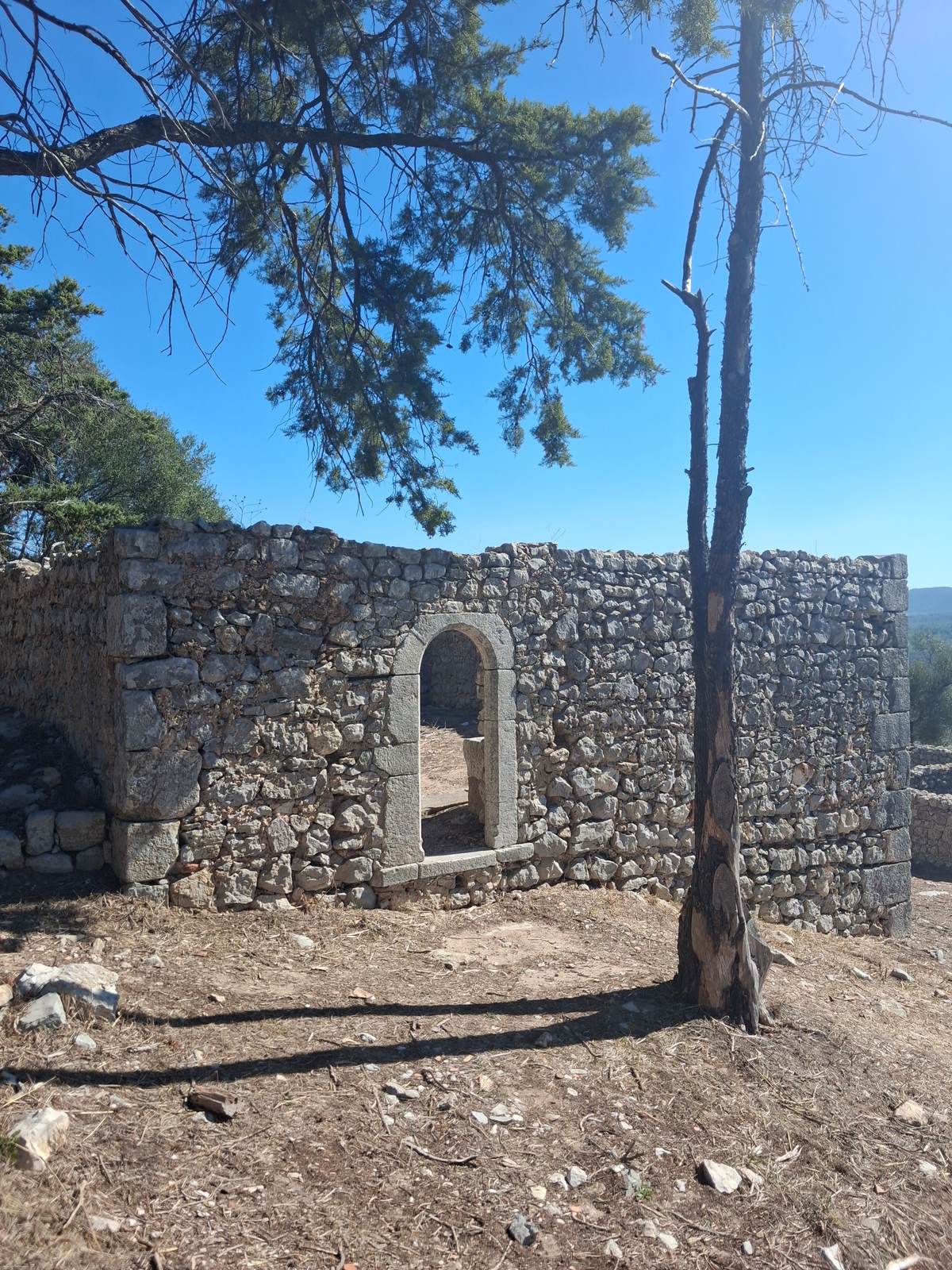
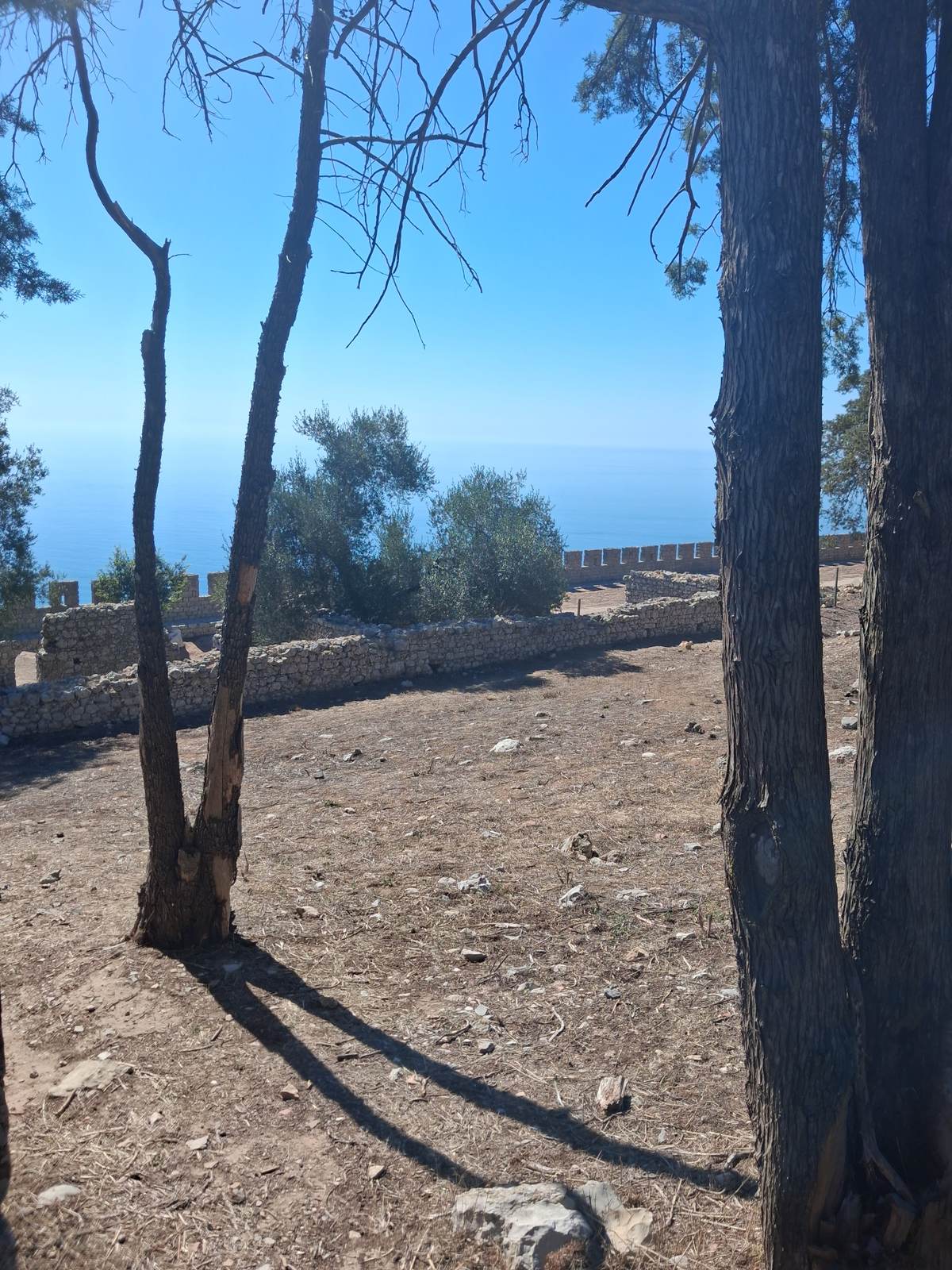
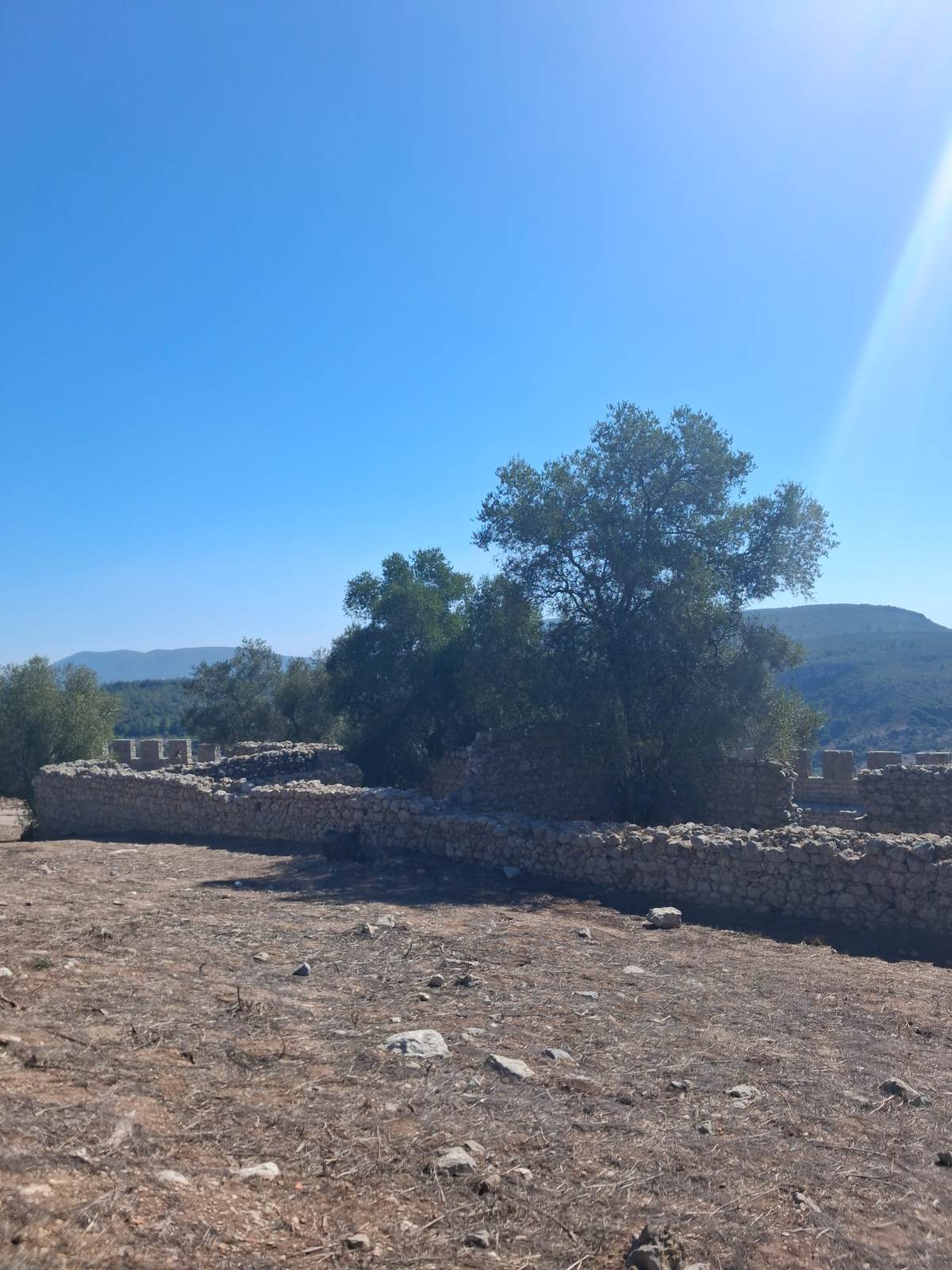
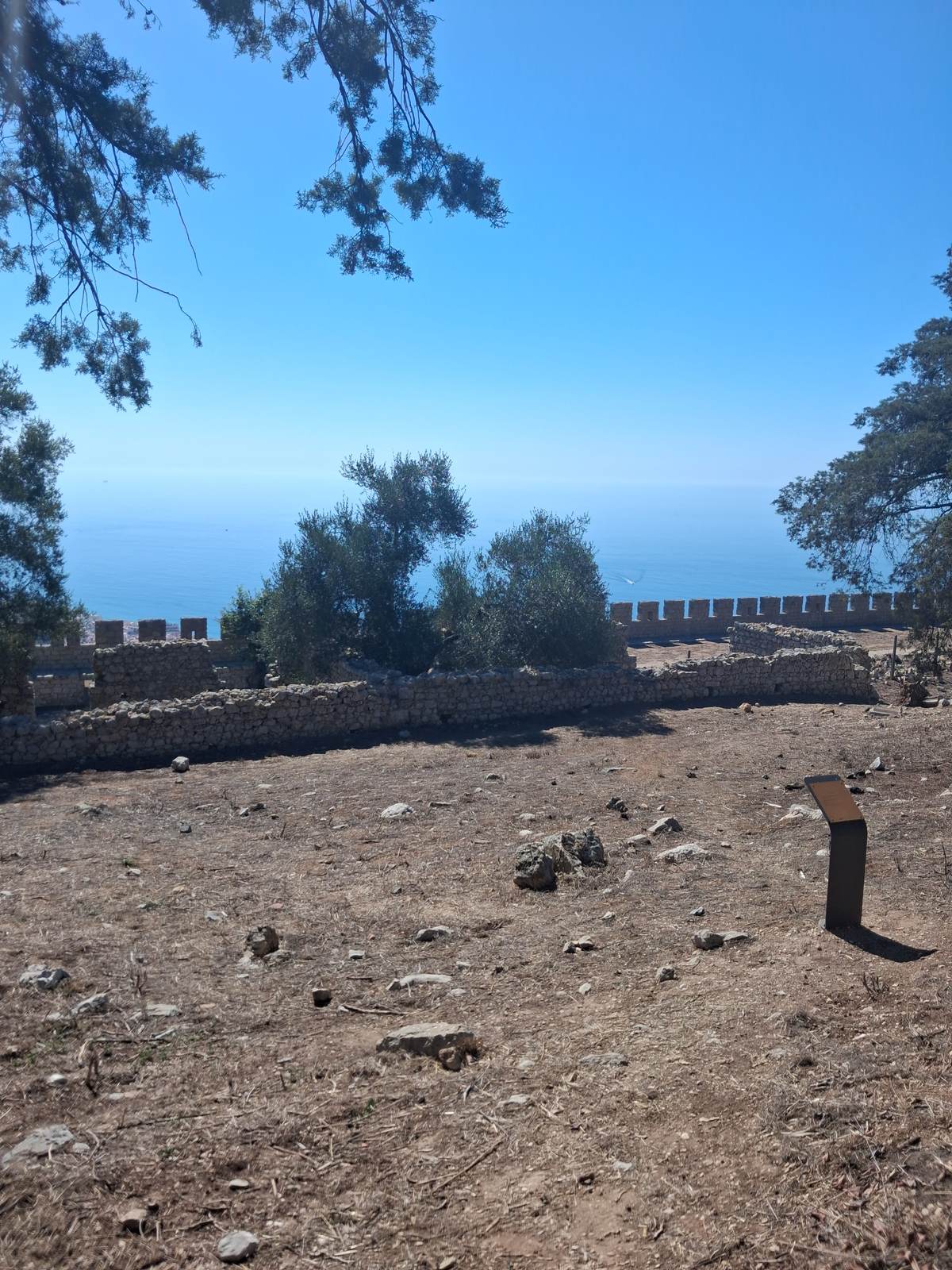
The full circuit of the walls in 14 stops: the bastion that never fired, the keep, the north wall, the cemetery, the church. Where Sesimbra began.

Start the tourFree · nothing to install · 6 languages

Before you go

Start
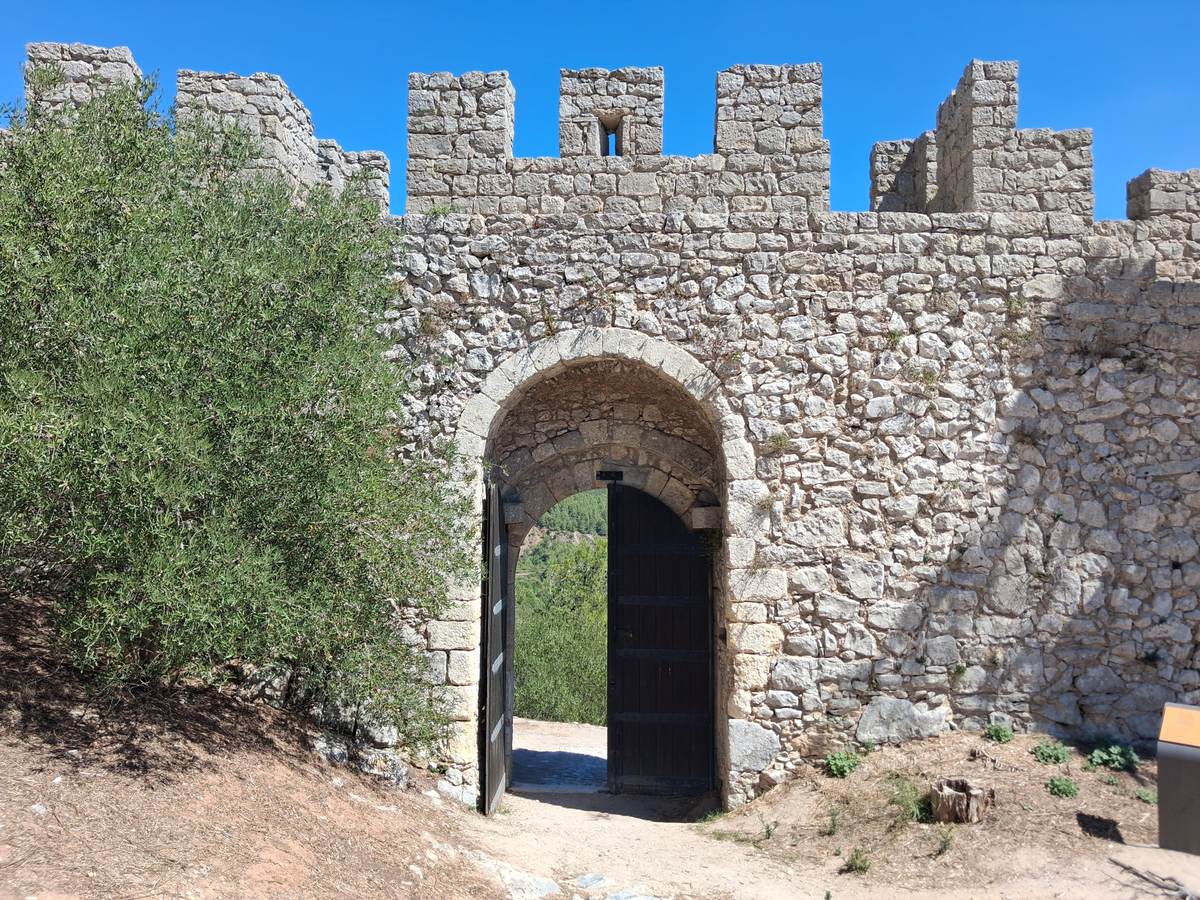
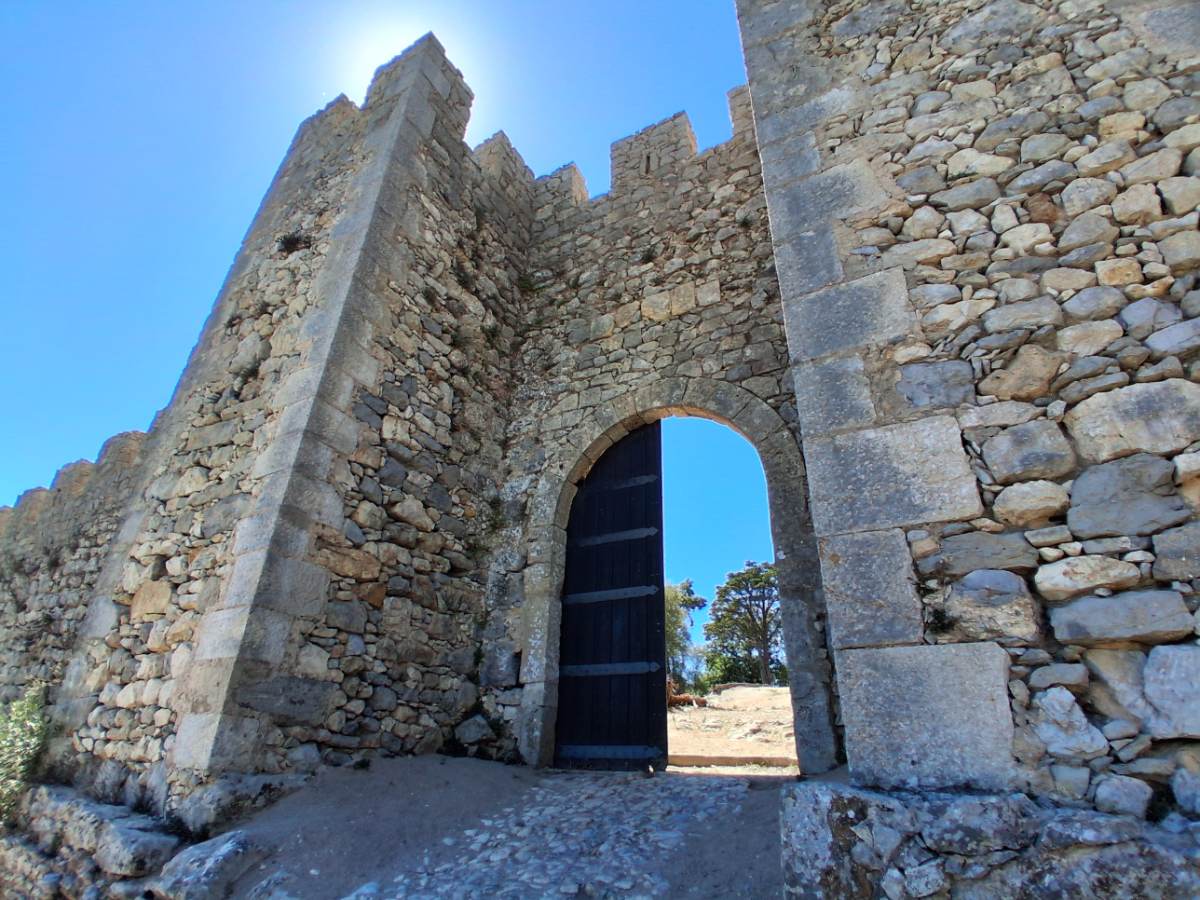
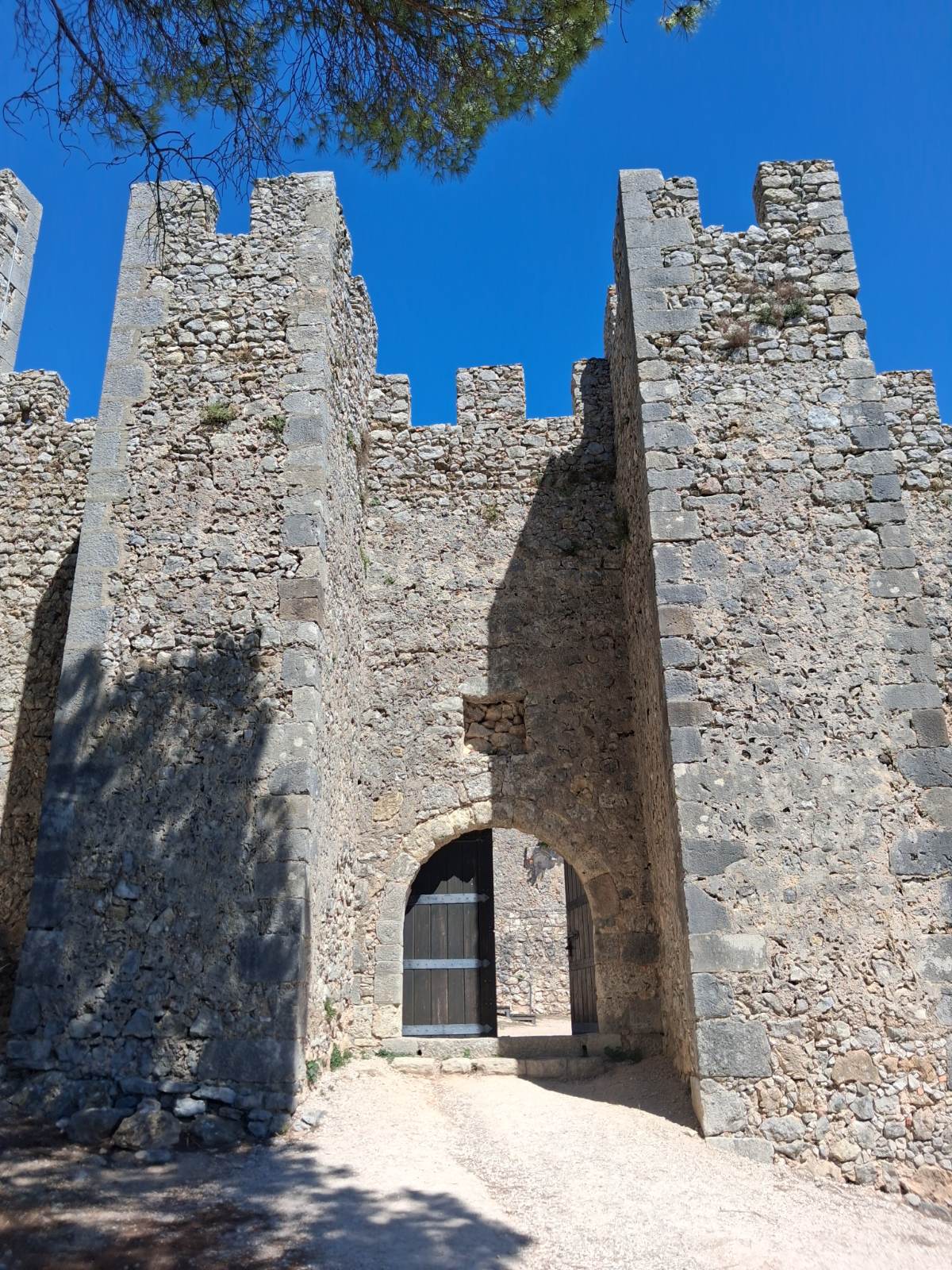
The gateway in the wall, next to the car park (which is inside the walls)
Finish
Church of Santa Maria do Castelo, beside the car park, the toilets and the café
Duration
1 hr · 1.6 km
Difficulty
Easy. The adarve — the wall-walk along the top of the rampart — has steps and stretches with no handrail; not suitable for a pushchair. Uneven ground
Who it's for
Families, school groups and day trippers; best in the late afternoon
Getting there
By car up the castle road, with free parking inside the walls. On foot by the footpath that climbs from Valparaíso, in the town (600 m, 20–25 min), which arrives at the Porta do Sol. Address: Rua de Nossa Senhora do Castelo, 2970-063 Sesimbra. Open every day, including public holidays: summer (last Sunday in March to last Saturday in October) 7am–8pm, winter 7am–7pm; admission free. Grounds accessible for reduced mobility (the wall-walk is not). Tourist office next to the café (9.30am–1pm and 2.30–5.30pm, closed Mondays). Toilets and the Cafetaria de Santiago behind the church

Please note. The adarve, the wall-walk along the top of the rampart, has stretches with no handrail: hold children by the hand. Wind, and little shade. The cemetery is no longer in use, but families still visit it: silence, and no photographs of the graves

The route

  1. Castle entrance — welcome
  2. Covas do Pão — the bread pits
  3. Torre Nova and the south wall-walk
  4. The castle cemetery
  5. The bastion
  6. Porta do Sol — the Sun Gate
  7. Casa da Vereação — the town hall
  8. The açougue — the town butchery
  9. The alcáçova — the citadel
  10. The keep and the cistern
  11. North wall-walk and the cubelo
  12. Porta da Azóia — the west gate
  13. The olive press
  14. Church of Santa Maria do Castelo — the end

The 14 stops of the tour

This is what you'll hear at each stop. On the ground, the audio plays by itself when you get there.

Castle entrance — welcome

Castle entrance — welcomeCastle entrance — welcome
▸Show the text of this stop

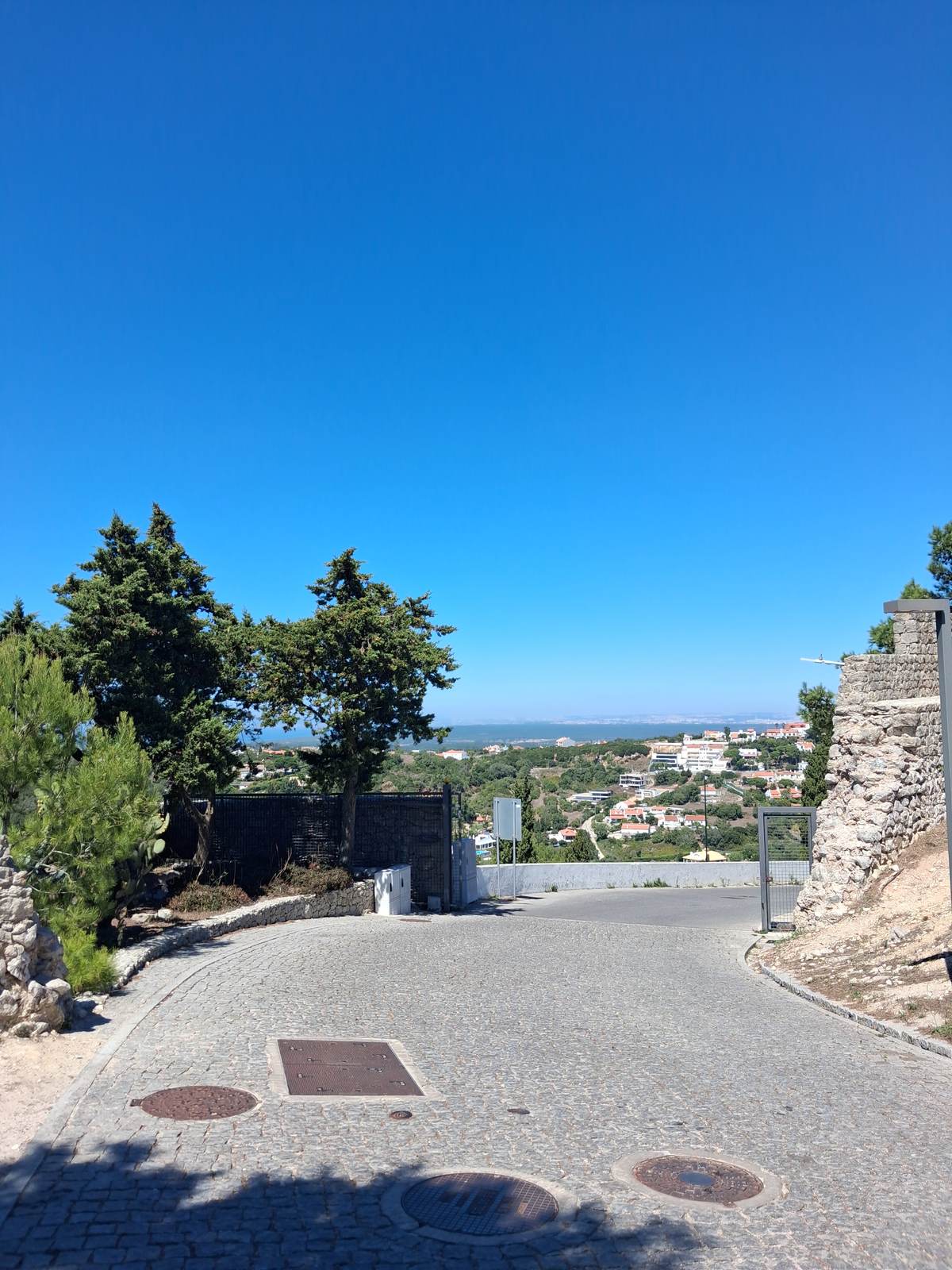
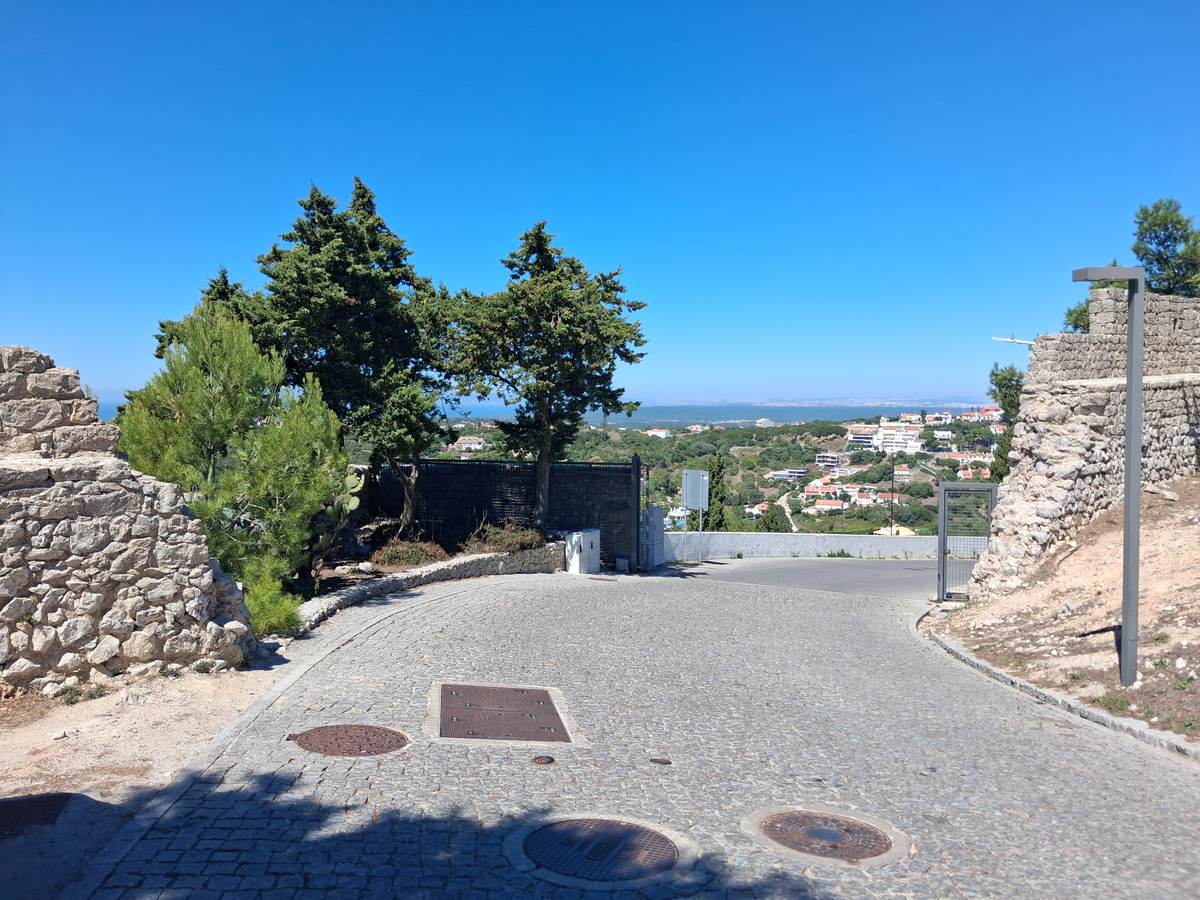
Welcome to Sesimbra Castle. The tour starts at the opening in the wall where the road passes through, on the western side, next to the car park. If you came by car, you have already parked inside the walls: walk back a few metres to that opening. If you came up on foot by the path from Valparaíso, you came in through the Porta do Sol, on the far side of the castle: cross the enclosure to here, five minutes on foot — the Porta do Sol is the sixth stop, and you will come back to it halfway round. This entrance is modern, made for cars; the old gates are elsewhere, and you will go through both of them. Look at the wall to your left and to your right: almost everything you see has been raised, torn down and raised again, several times over, across eight and a half centuries.

The castle was born Muslim, in the ninth century. In 1165 Afonso Henriques, the first king of Portugal, took it from the Moors. In 1191 the Almohads came back: the town was abandoned and the fortress damaged. Four years later it was taken back by Frankish settlers, and that is what led Sancho the First to give Sesimbra its first royal charter, in 1201. In 1236 Sancho the Second handed the town and the castle to the Order of Santiago, the warrior monks who also held Palmela and Alcácer.

Sesimbra was born up here, not down by the sea. For three hundred years people lived inside these walls, because of the pirates, and went down to the shore only to fish; they called the town below the Ribeira, the riverside. In the thirteenth century this castle did more than guard the coast: it was the main settlement of the whole region. Only in the fifteenth and sixteenth centuries did the town move down to where it is today. The castle was left with the church, the graveyard and the wind.

This tour takes you round the whole circuit, about an hour. To your left, against the wall, there is a cistern: the town had several, and you will see the main one up in the citadel. Follow the road a few metres inside: the round holes in the rock, on your left, are the first stop.
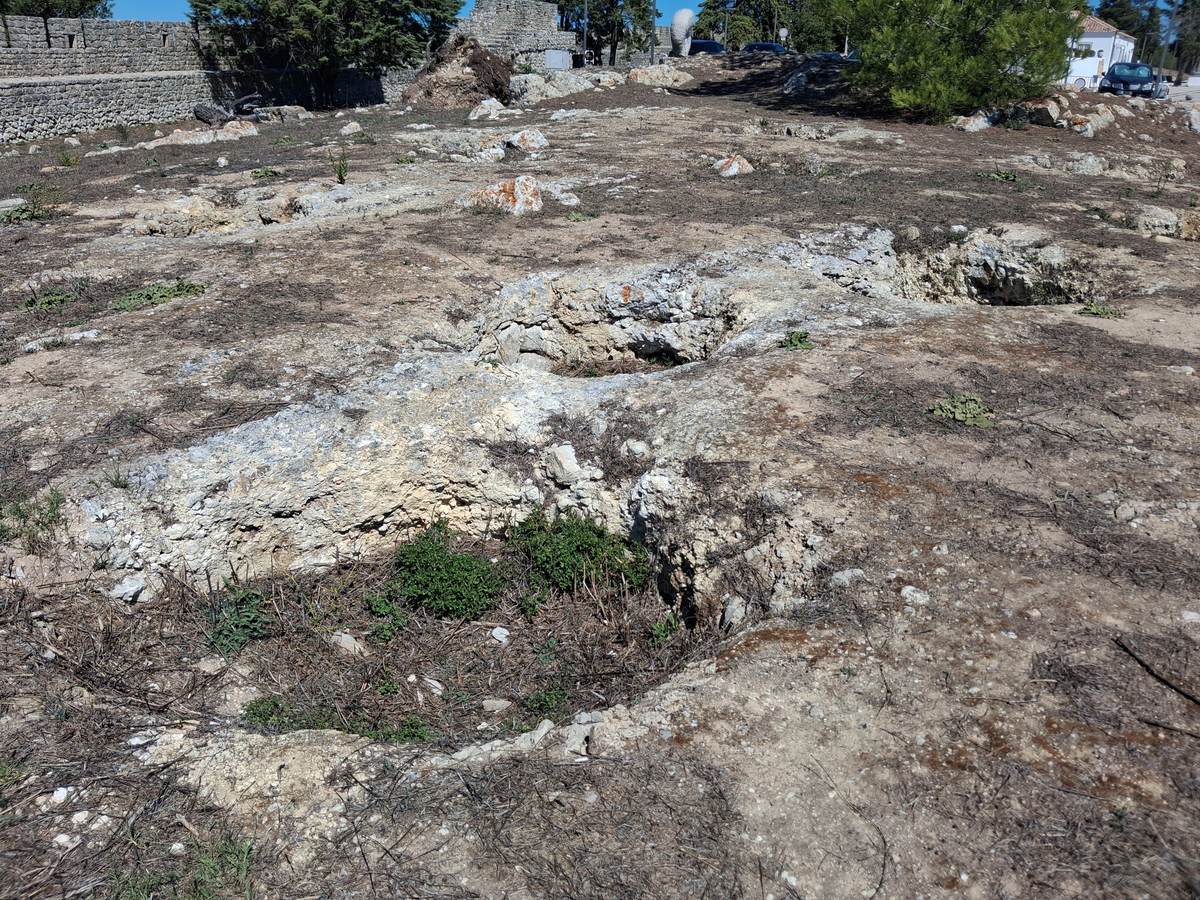
Covas do Pão — the bread pits

Covas do Pão — the bread pitsCovas do Pão — the bread pits
▸Show the text of this stop

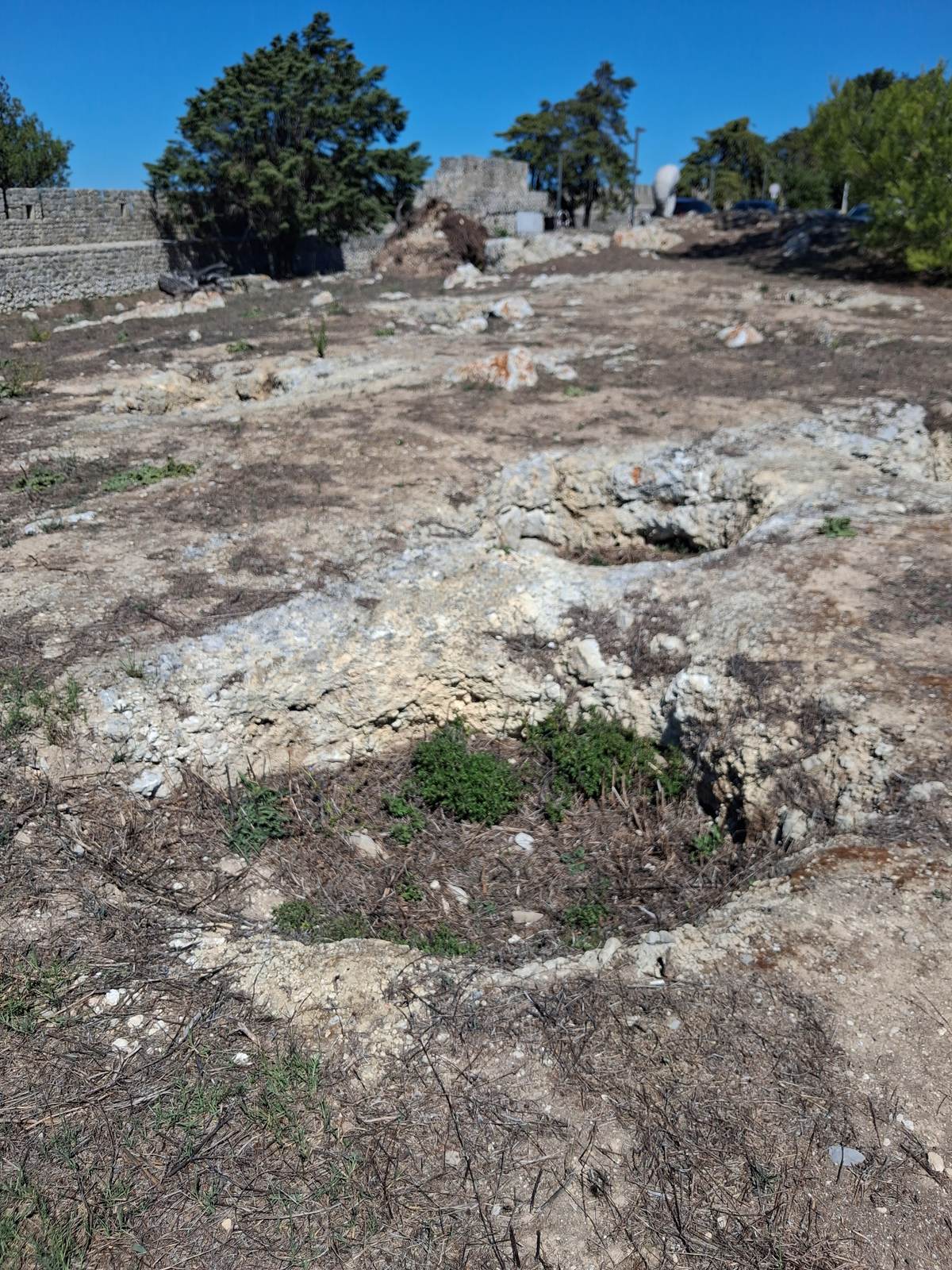
Look at the ground. These round holes cut into the rock are neither accident nor erosion: they are silos, and they are called covas do pão, bread pits. This is where the town's grain was kept, wheat and barley, buried, covered with a stone and sealed with clay or straw, safe from damp, from rats and from the heat.

A single pit like this could hold a family's bread for a whole year. In a walled town that lived in fear of pirates and of sieges, this mattered as much as the wall itself: without grain in store, a siege of a few weeks was enough to take the castle.

Notice how many there are, and the size of each one. Every pit was a family, or a household. That gives you an idea of how many people lived up here, with the sea below and the hills behind.

Now walk back a few steps towards the entrance and climb onto the wall on the seaward side, to your left. The wall-walk is waiting for you, with the best view over Sesimbra.

Torre Nova and the south wall-walk

Torre Nova and the south wall-walkTorre Nova and the south wall-walkTorre Nova and the south wall-walkTorre Nova and the south wall-walk
▸Show the text of this stop

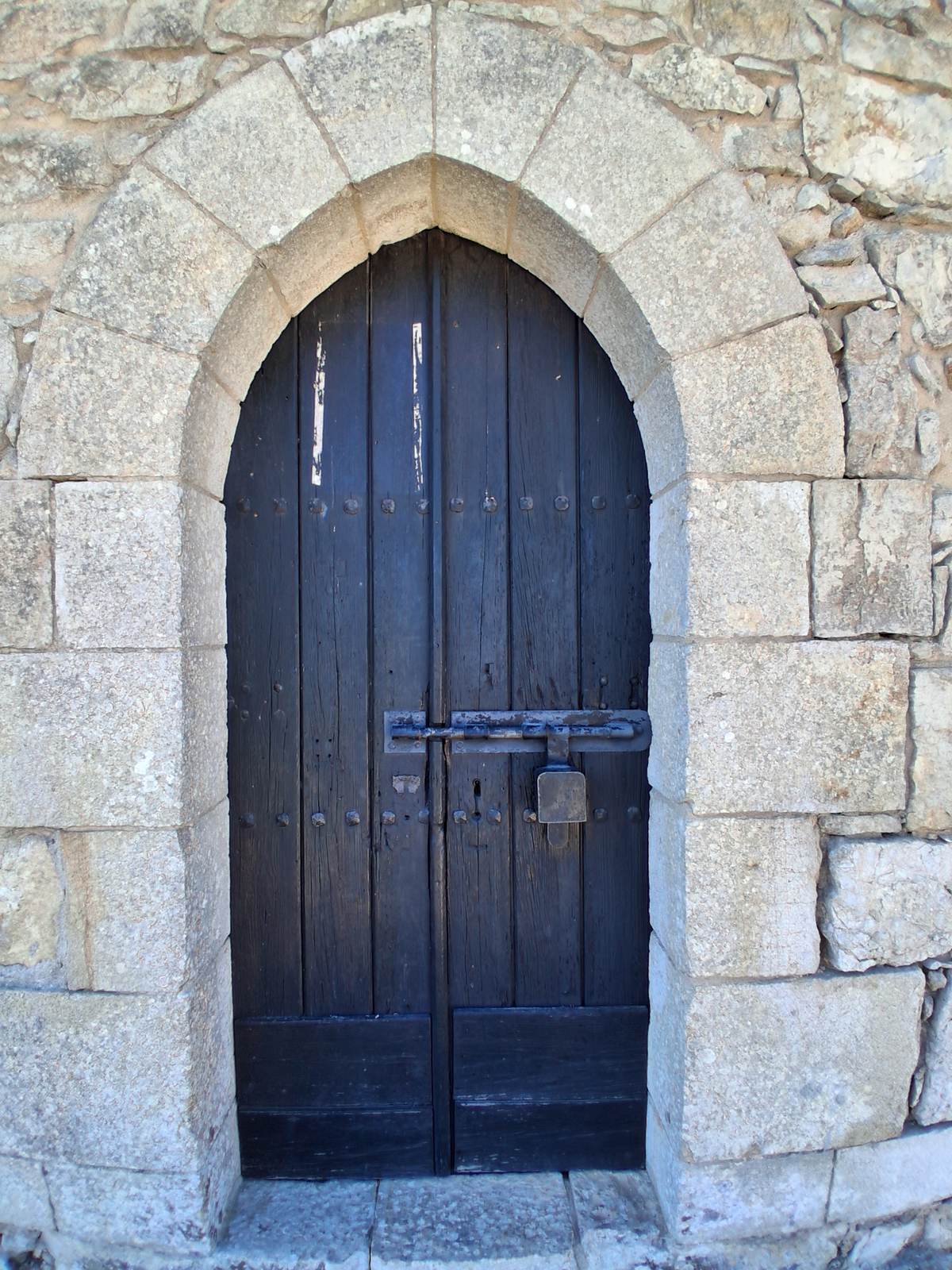
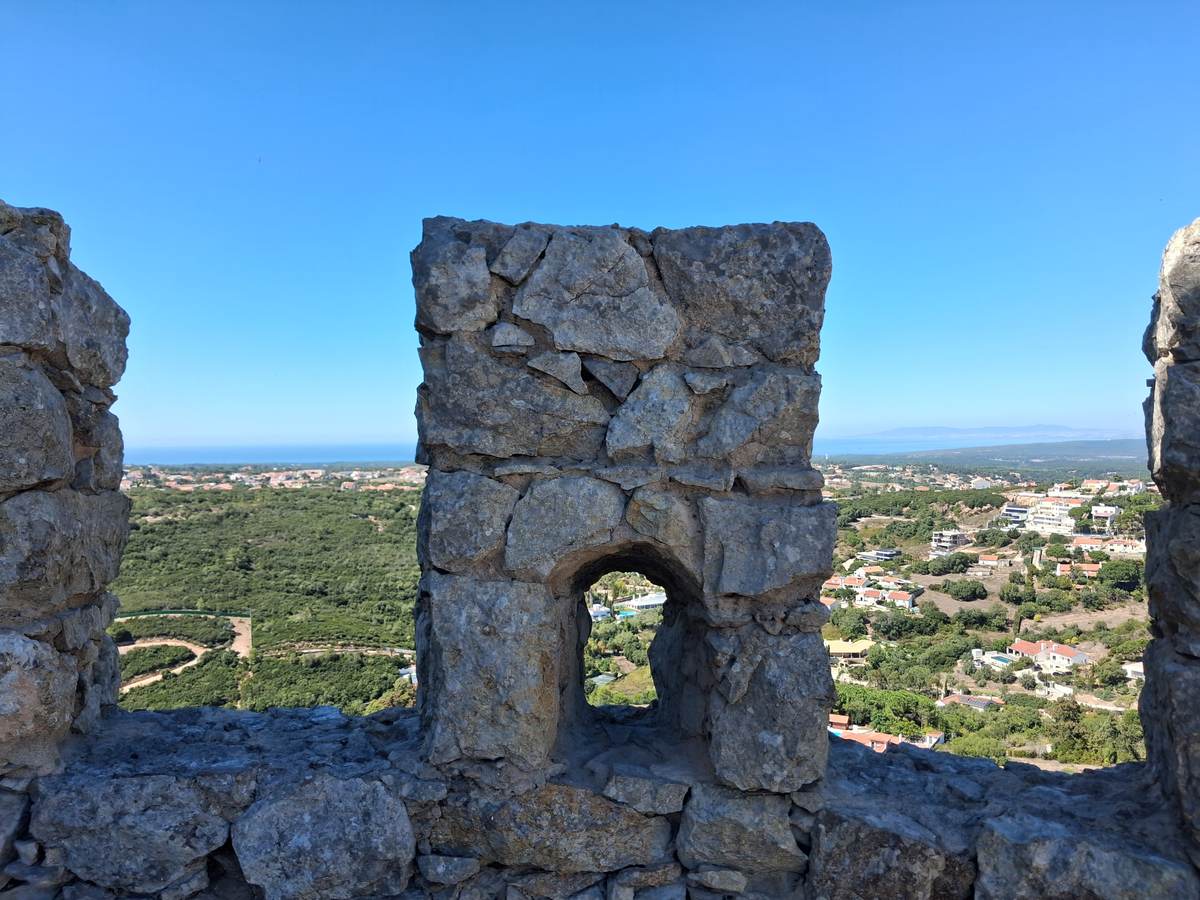
Before you climb up, look at the tower beside you, at the western tip of the castle: this is the Torre Nova, the New Tower, also called the Watchtower, built for King Dinis at the end of the thirteenth century, when the town had already been Portuguese for a hundred years. It did not defend a gate: it was there to see. From here they watched the town below and the whole coast to the south, and it was from here that the alarm was given. Notice the pointed archway, narrow, made for one person at a time. If it is open, look inside: there is an exhibition about the castle. Now climb up to the wall-walk.

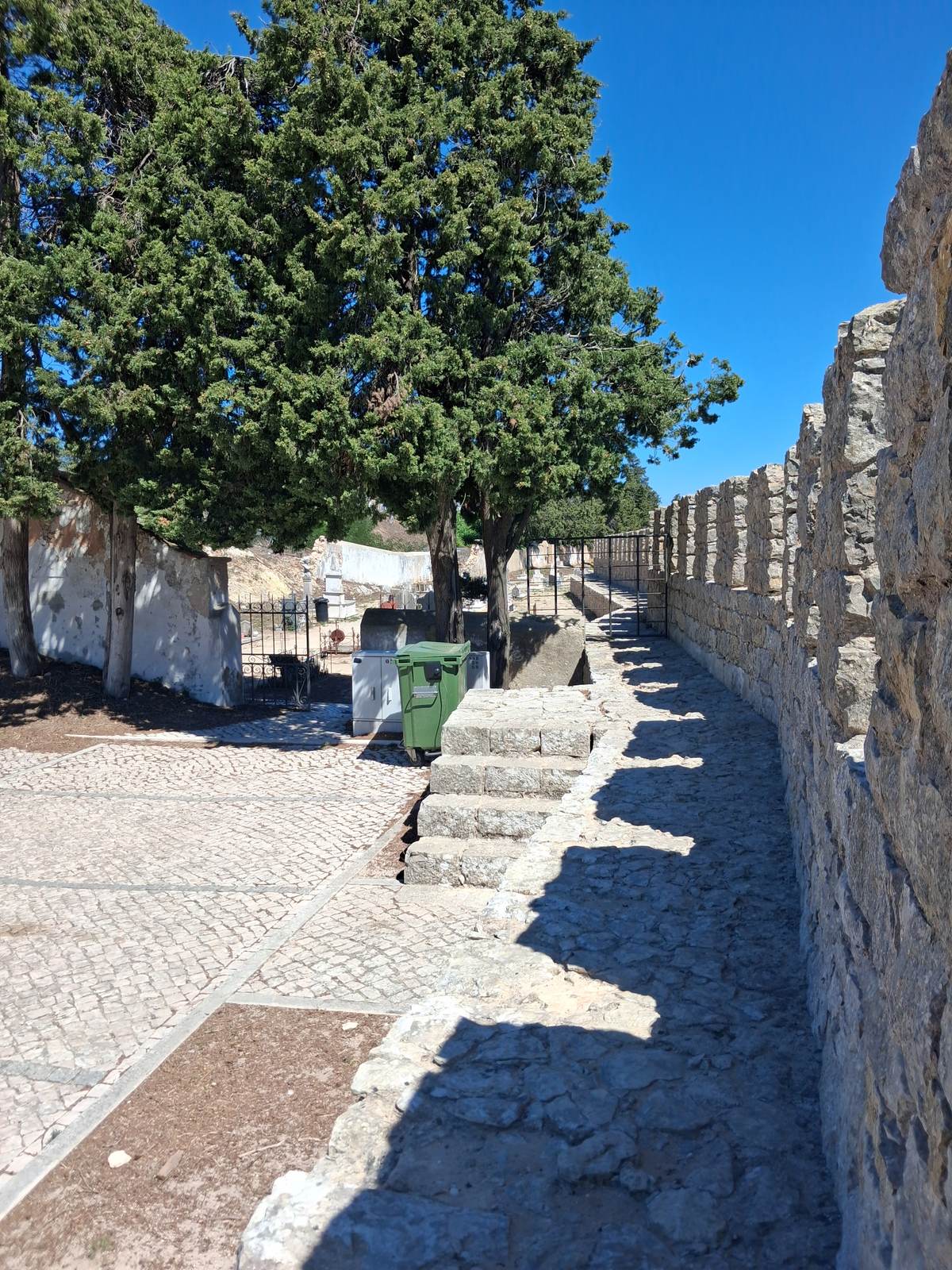
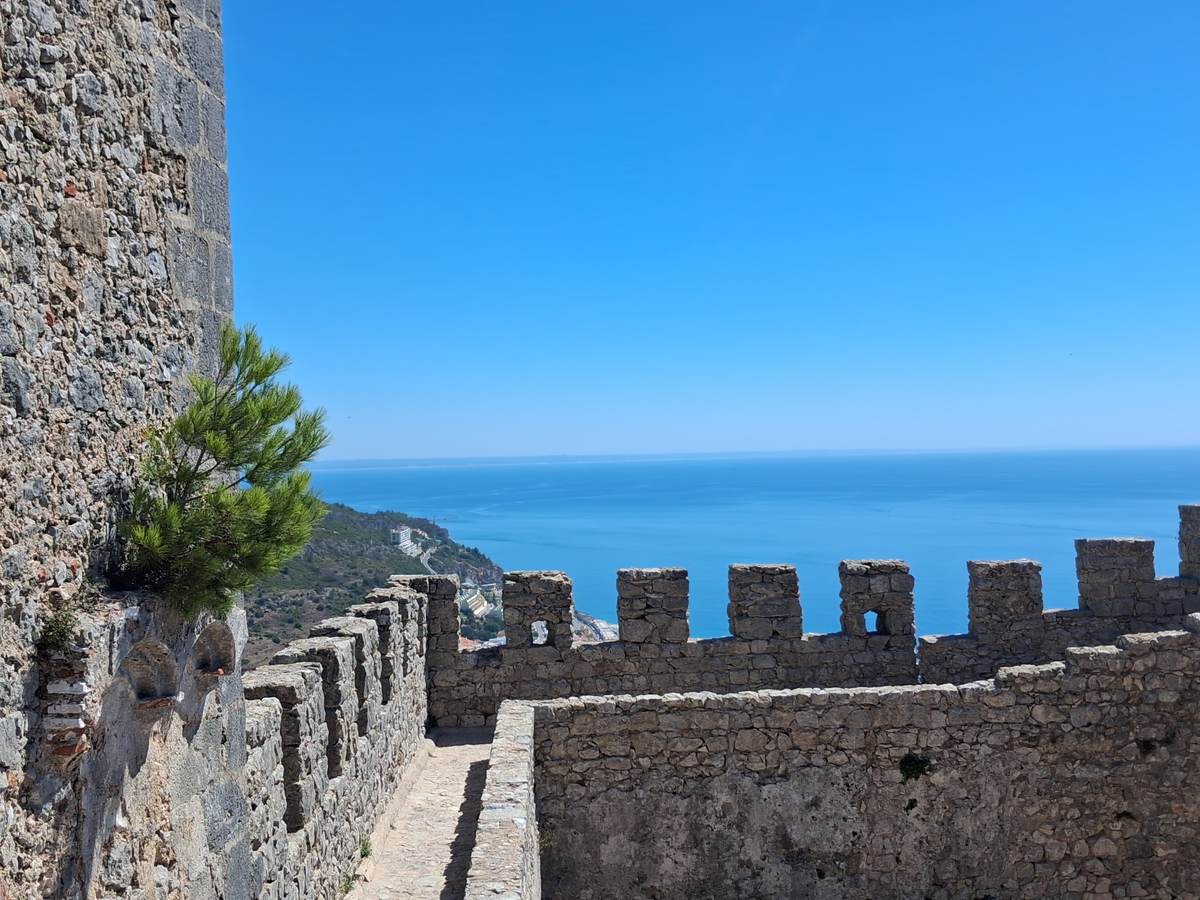
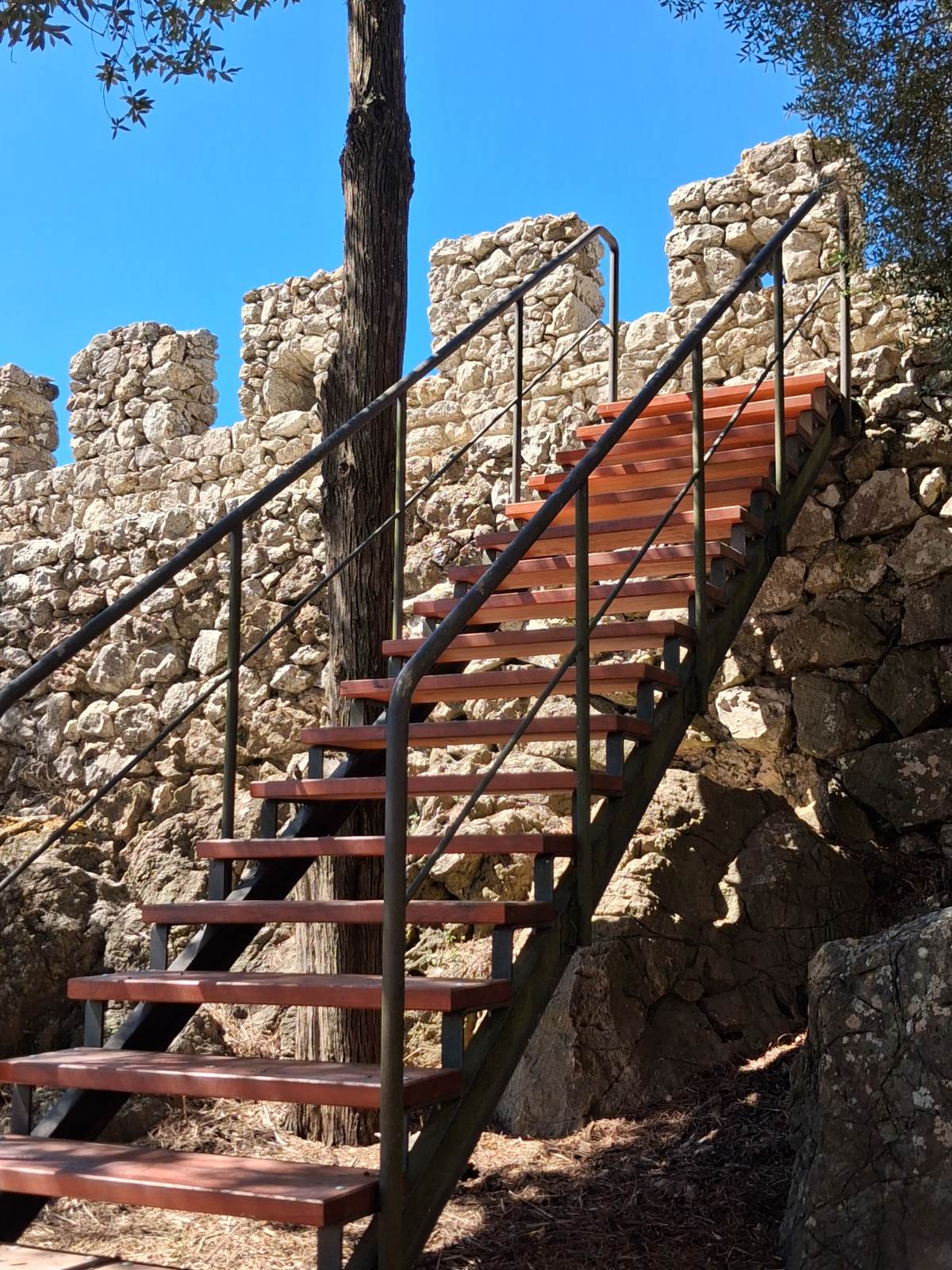
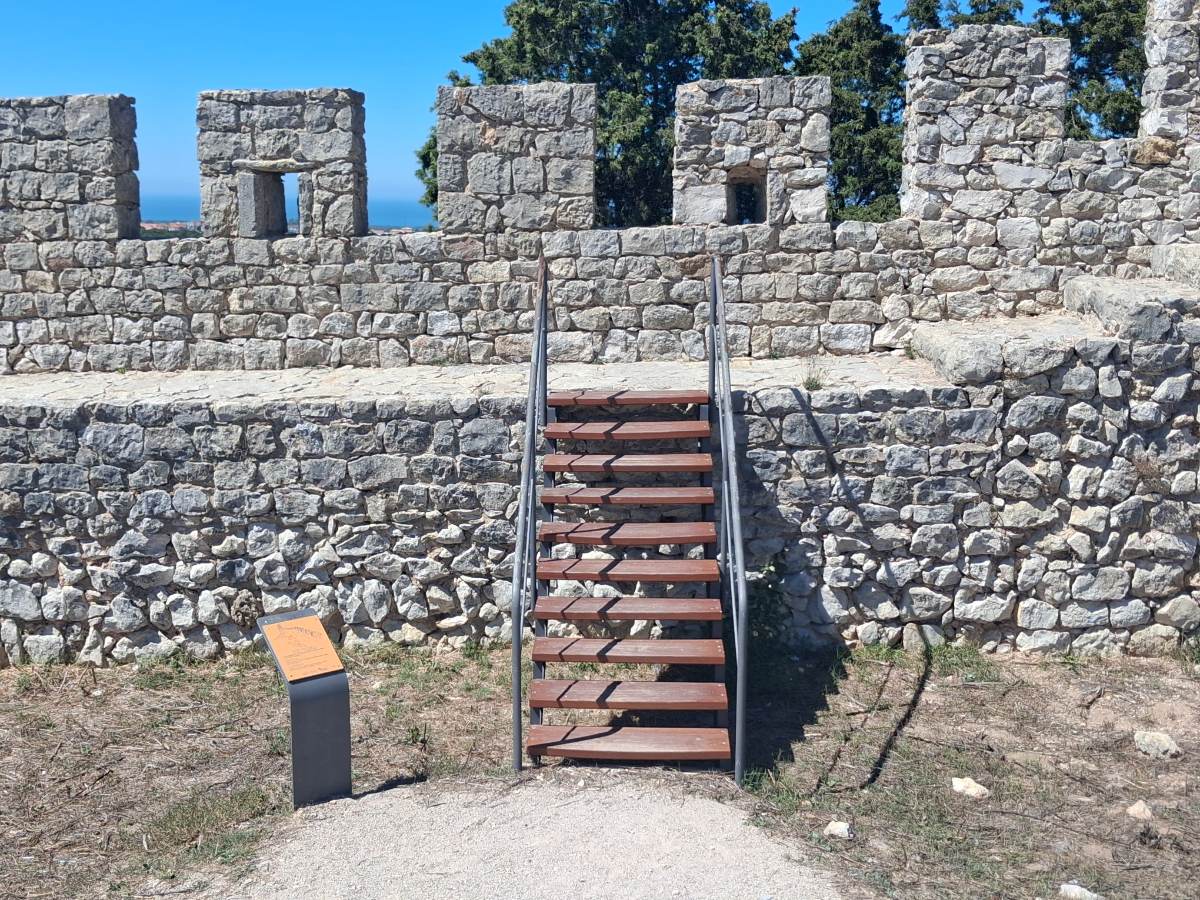
You are on the adarve, the wall-walk along the top of the rampart where the sentries did their rounds. Take care: some stretches have no handrail and the wind can be strong. Hold children by the hand.

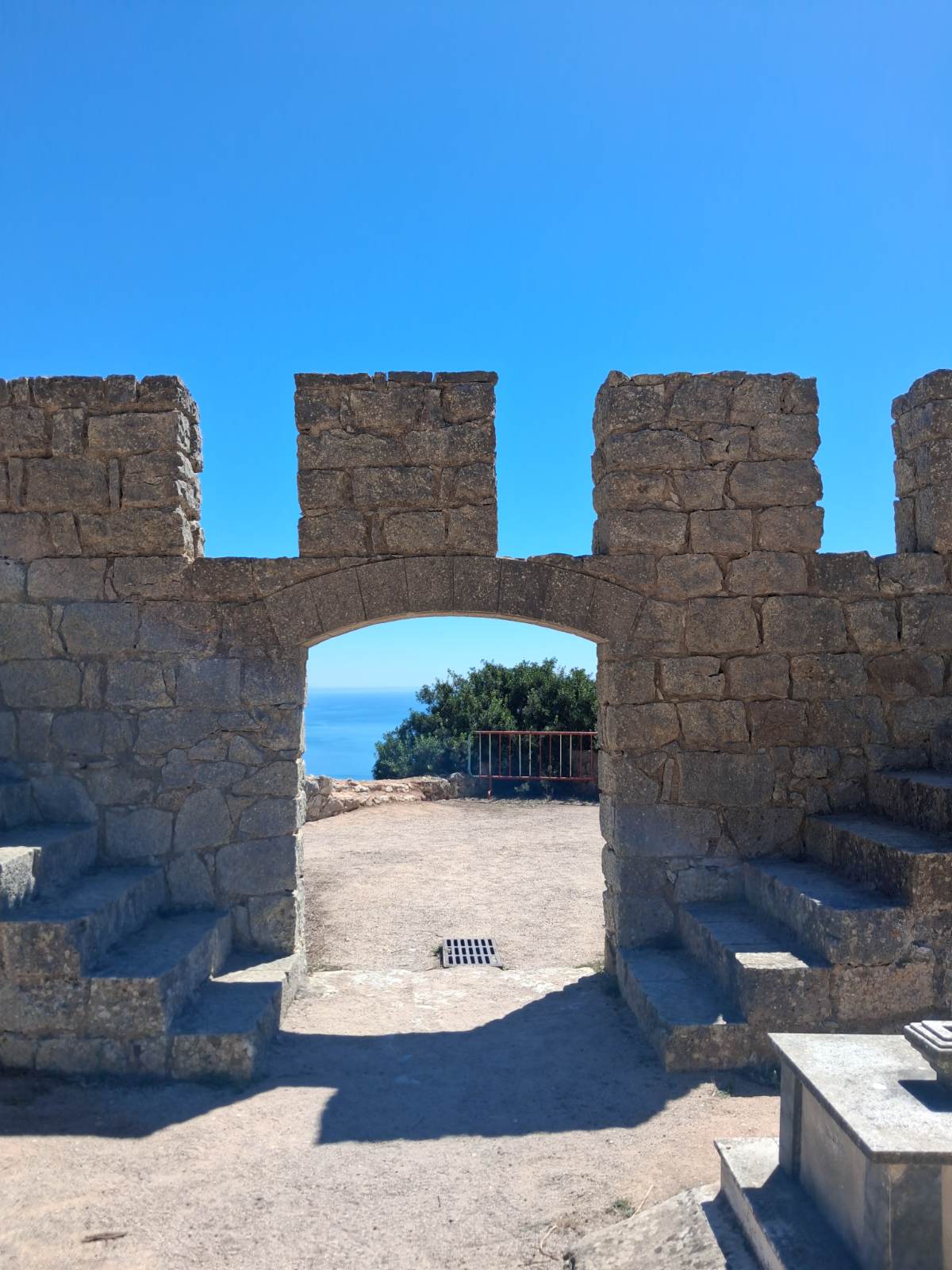
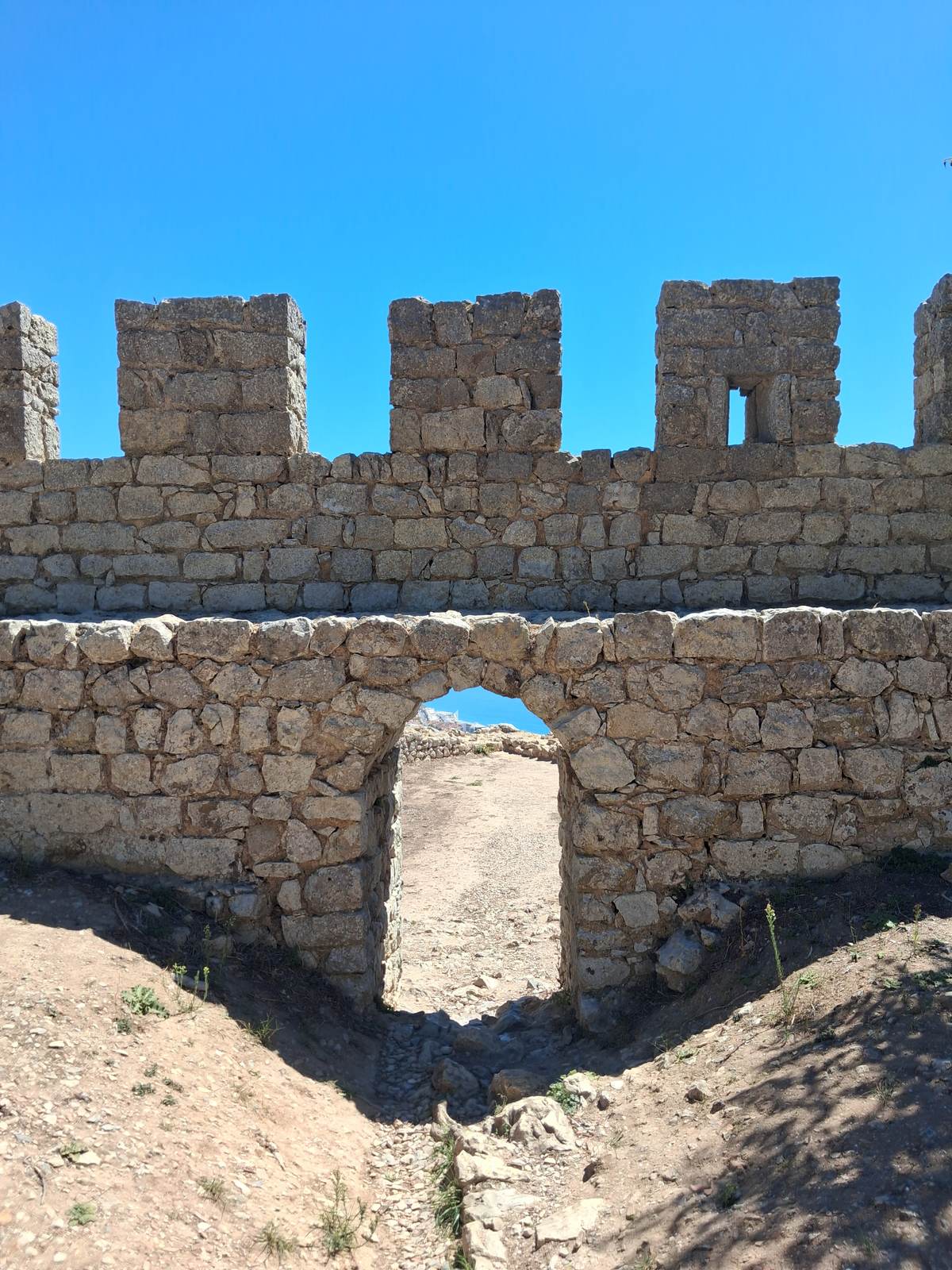
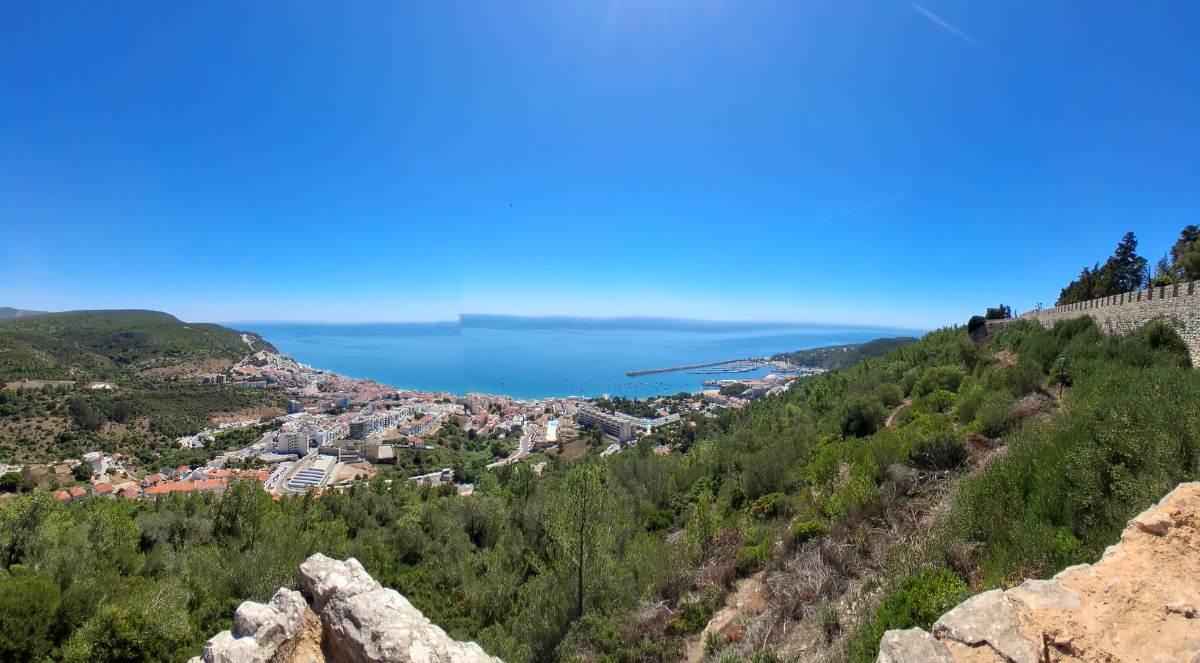
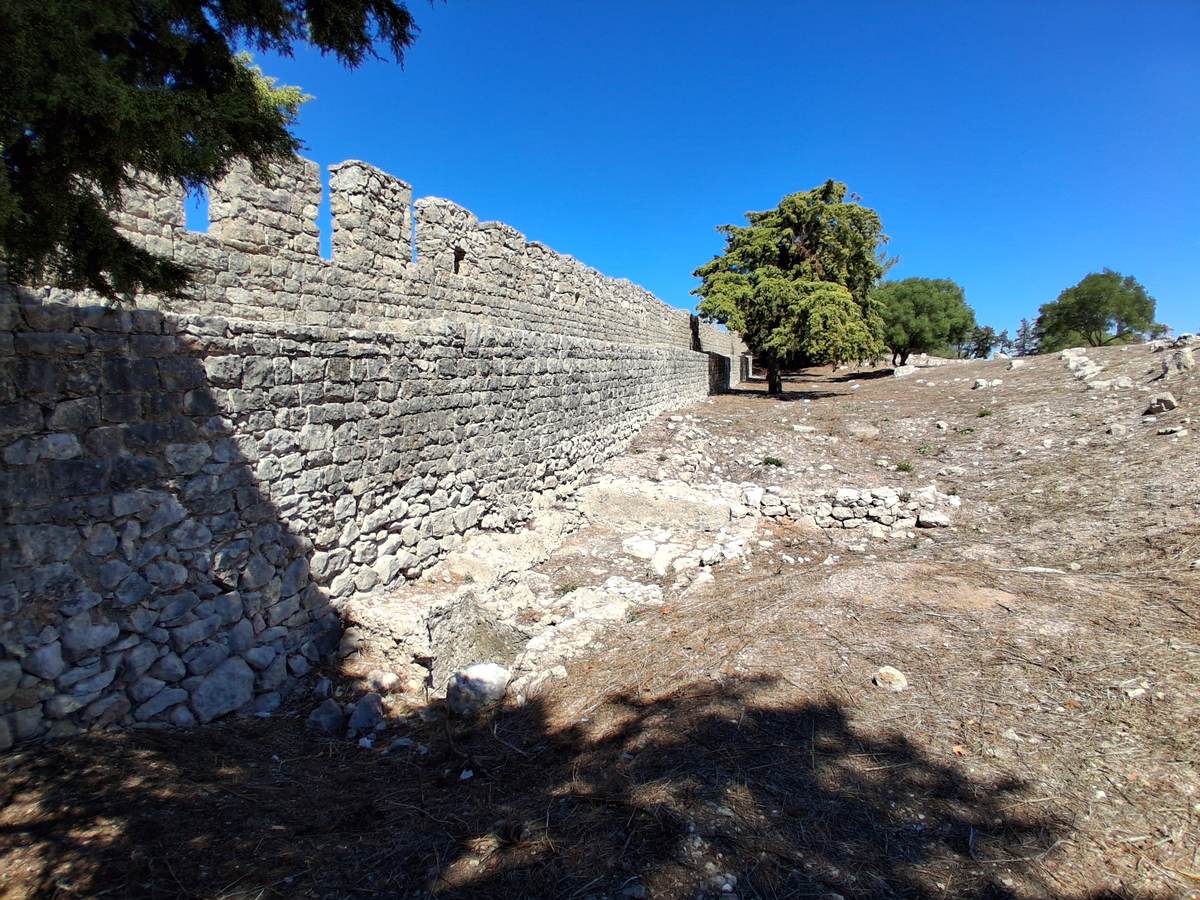
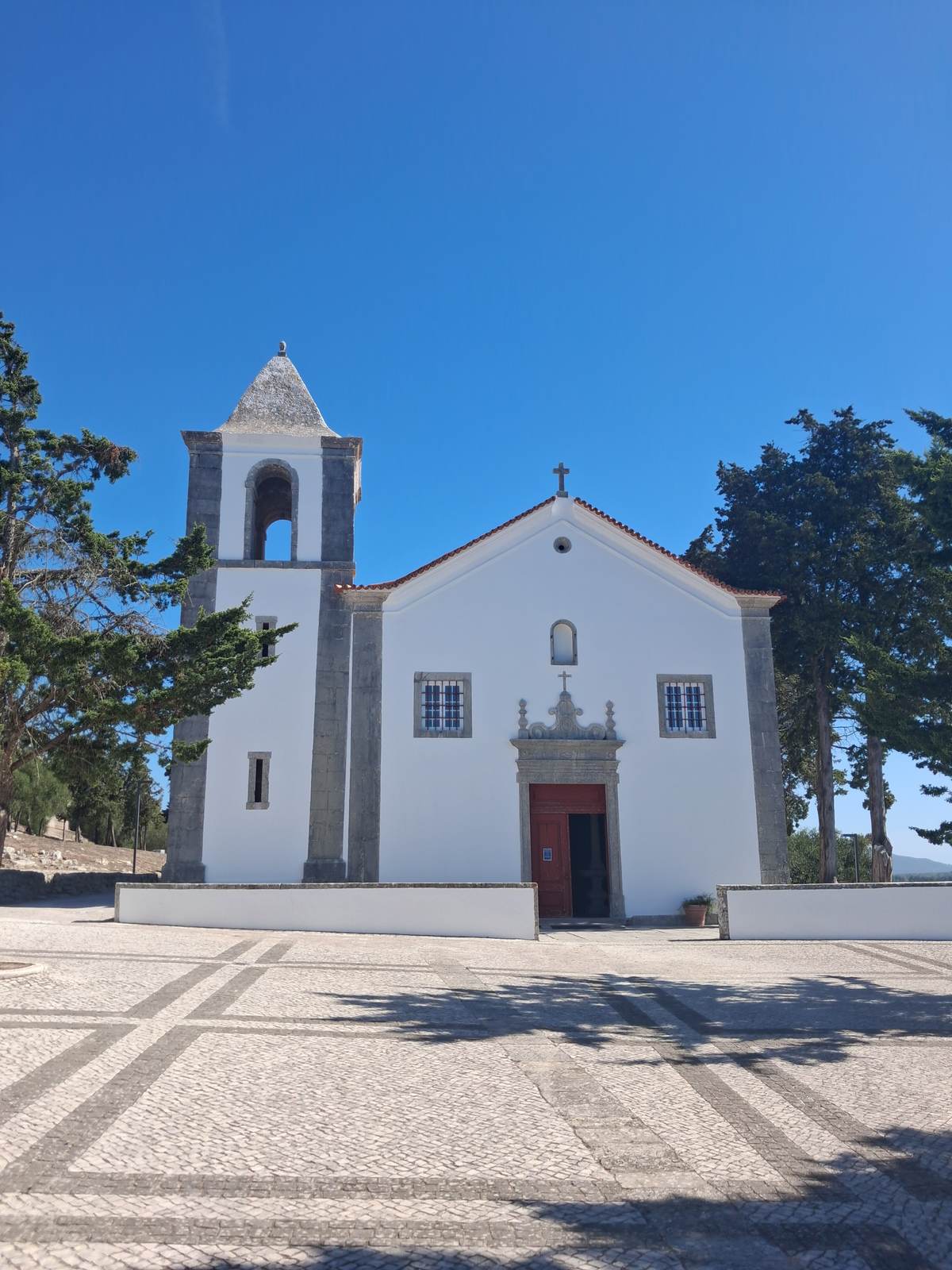
Look at the merlons, the stone teeth that sheltered the watchmen. Now look at the foot of the wall: can you see where the stone changes colour or size? Those are the seams of its history. The more irregular courses, lower down, may be from the Muslim castle or from Sancho the First's rebuilding; the more regular ones, from the works of the centuries that followed. In the nineteen thirties and forties the castle was restored, at times with more imagination than rigour, and that is why some merlons look new: they are.

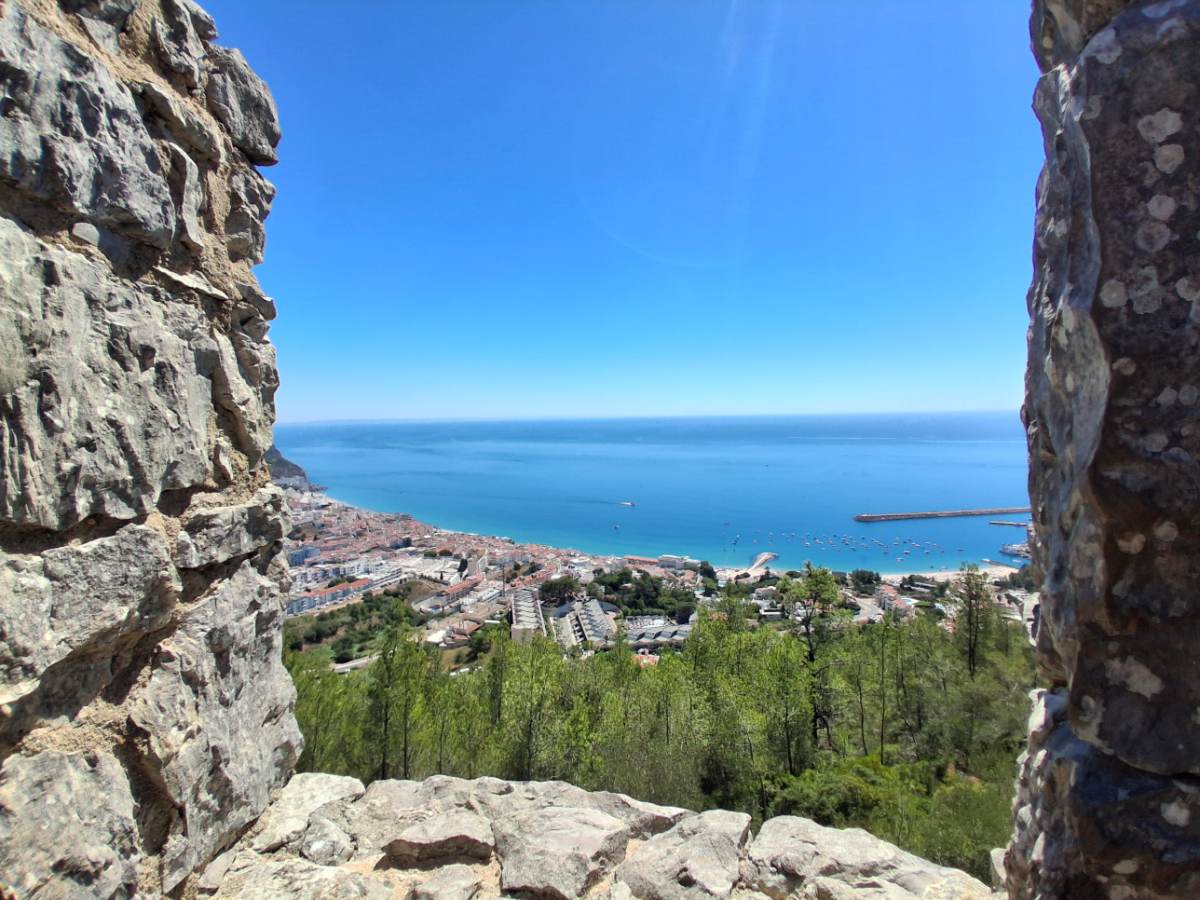
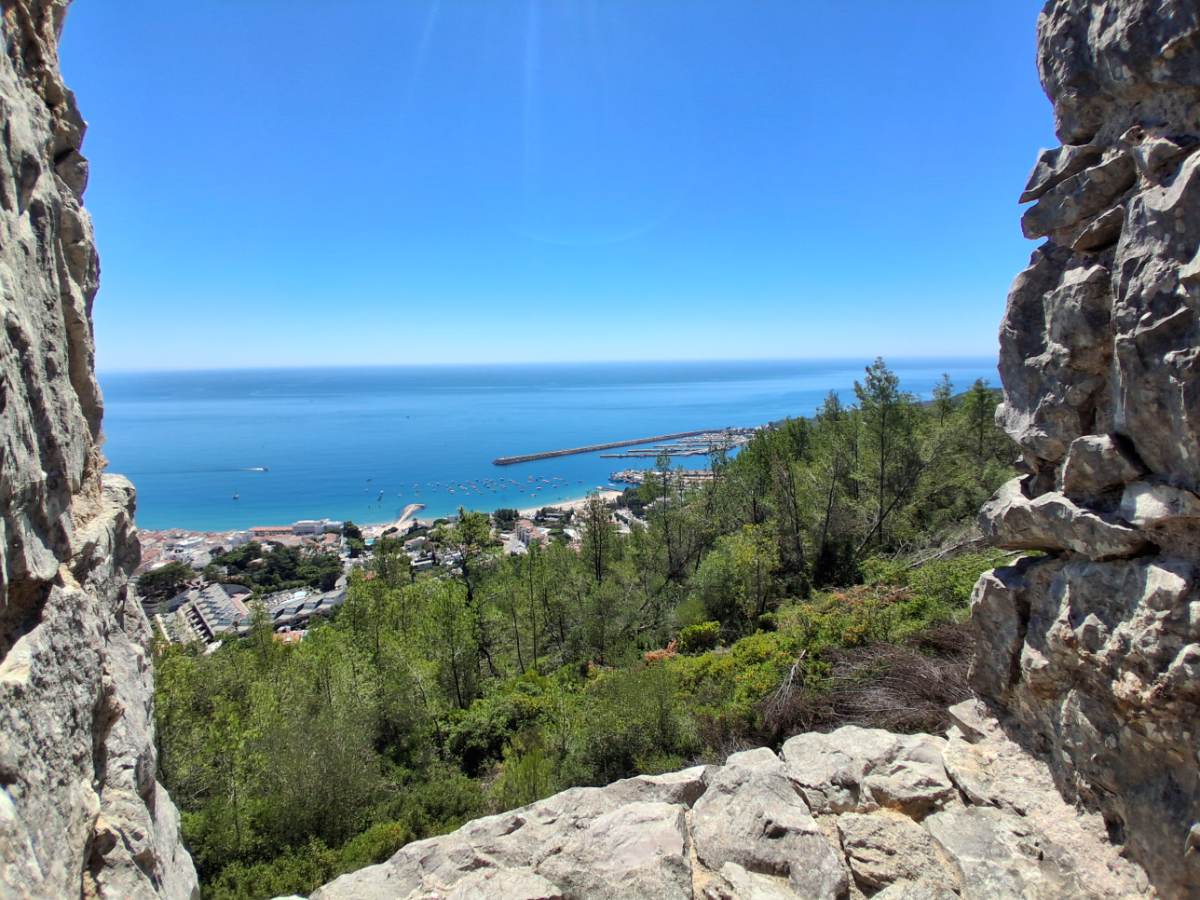
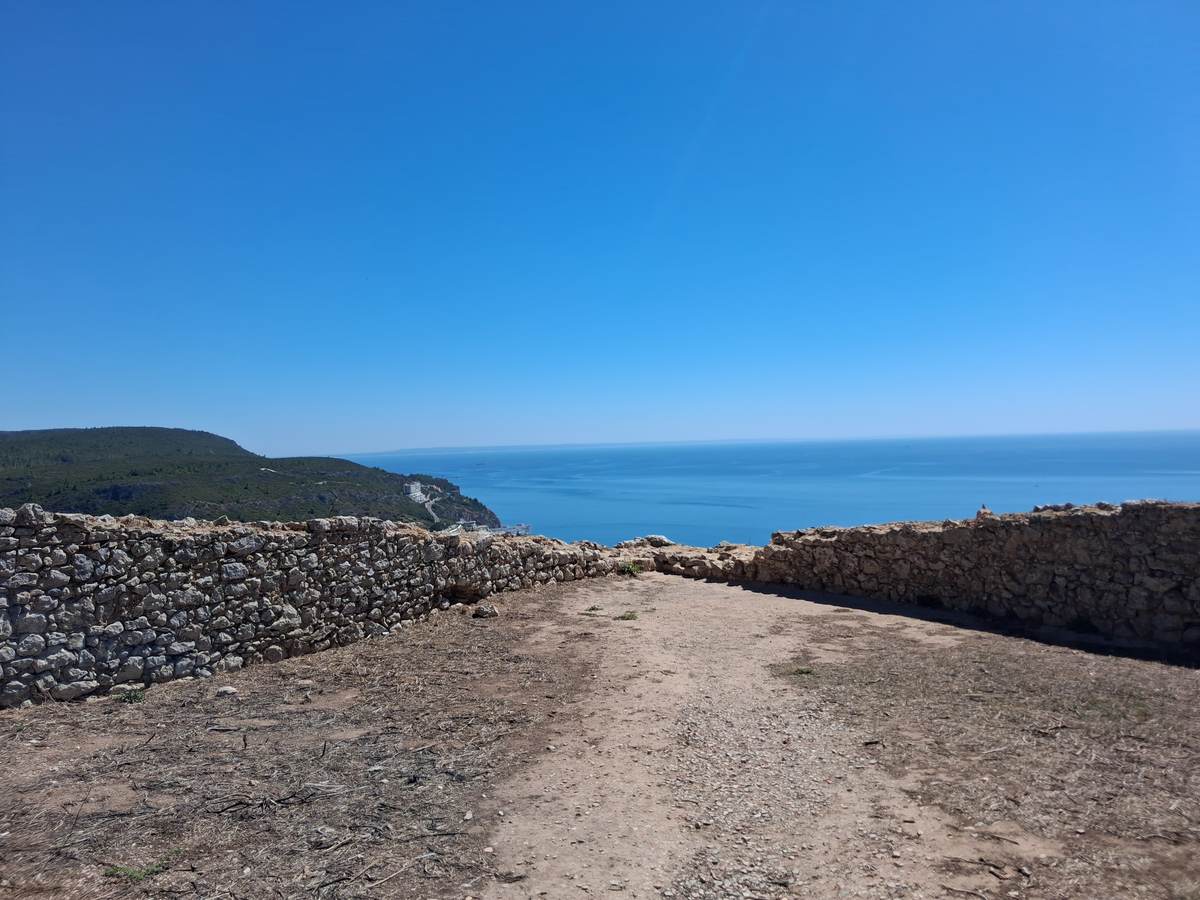
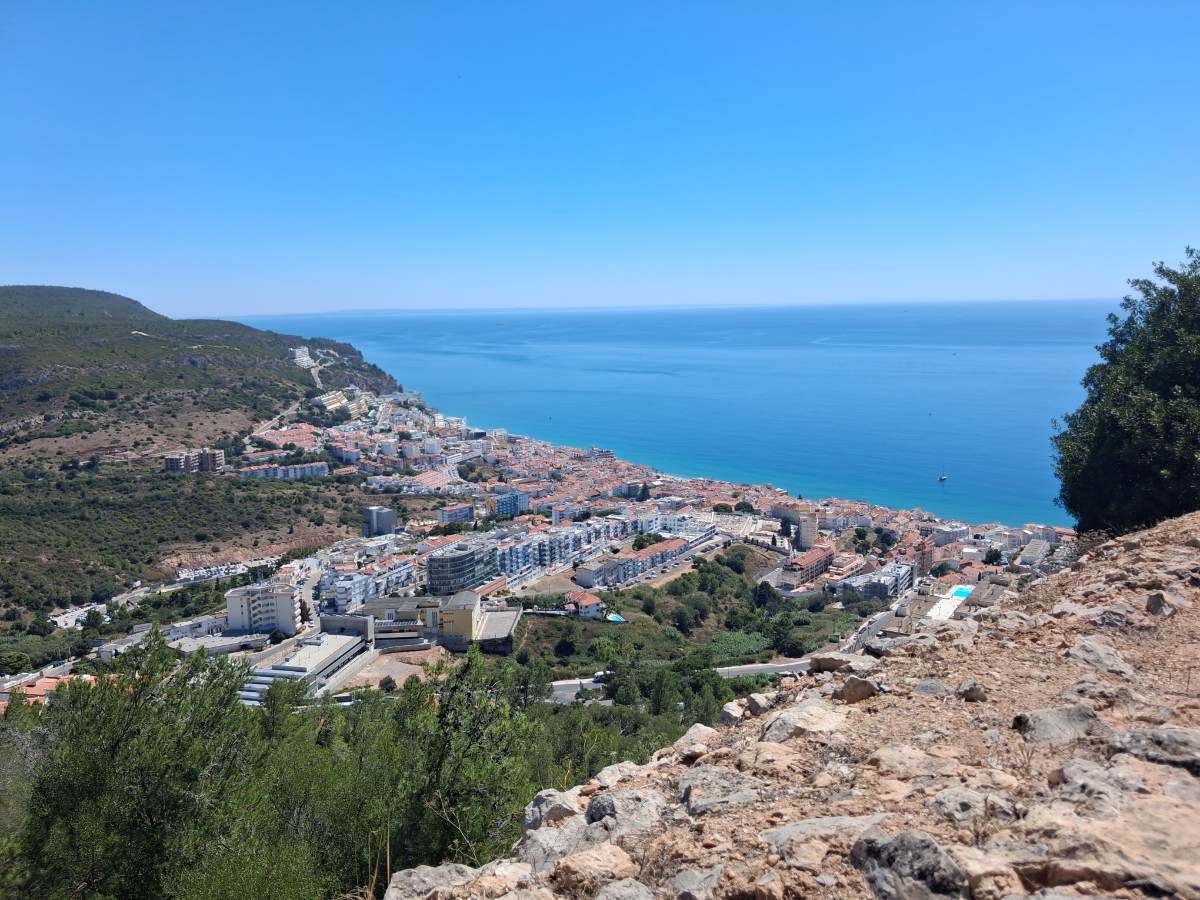
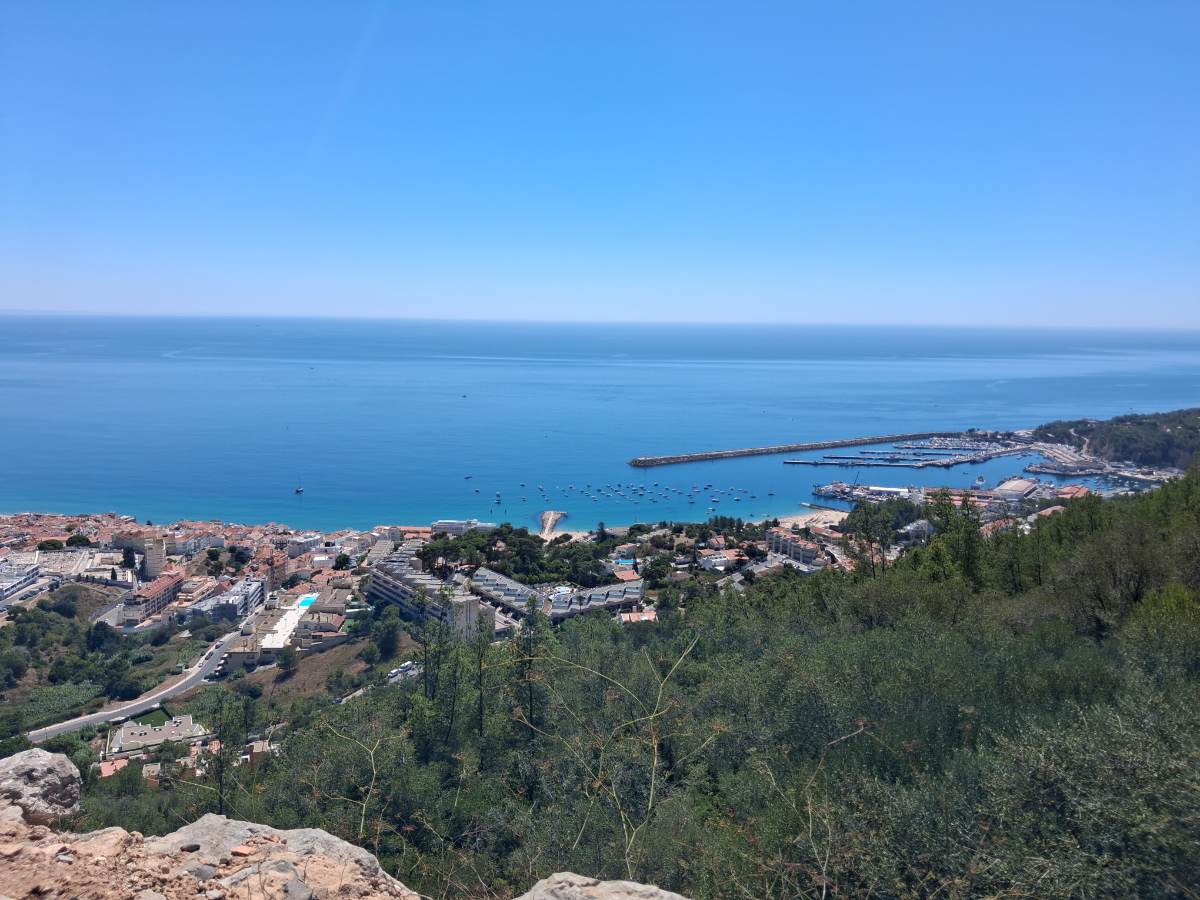
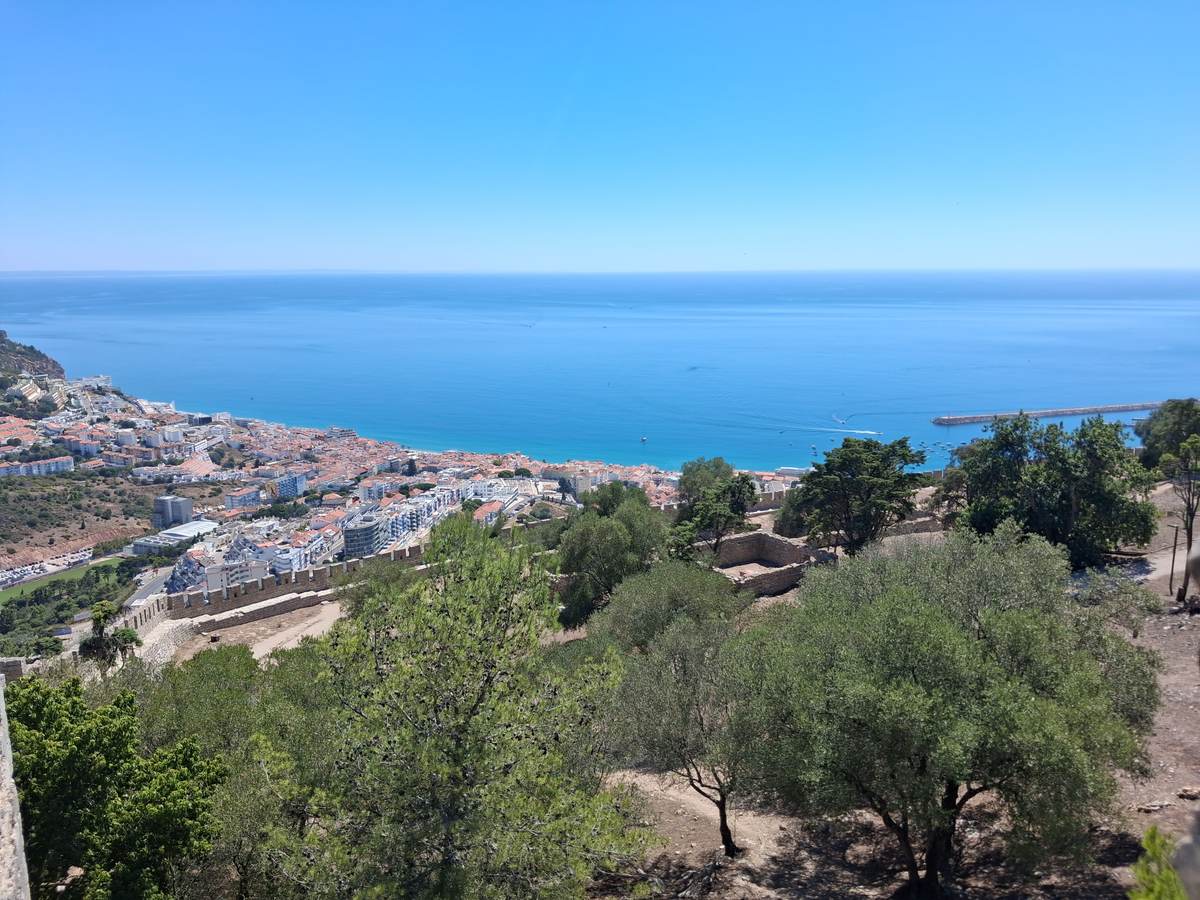
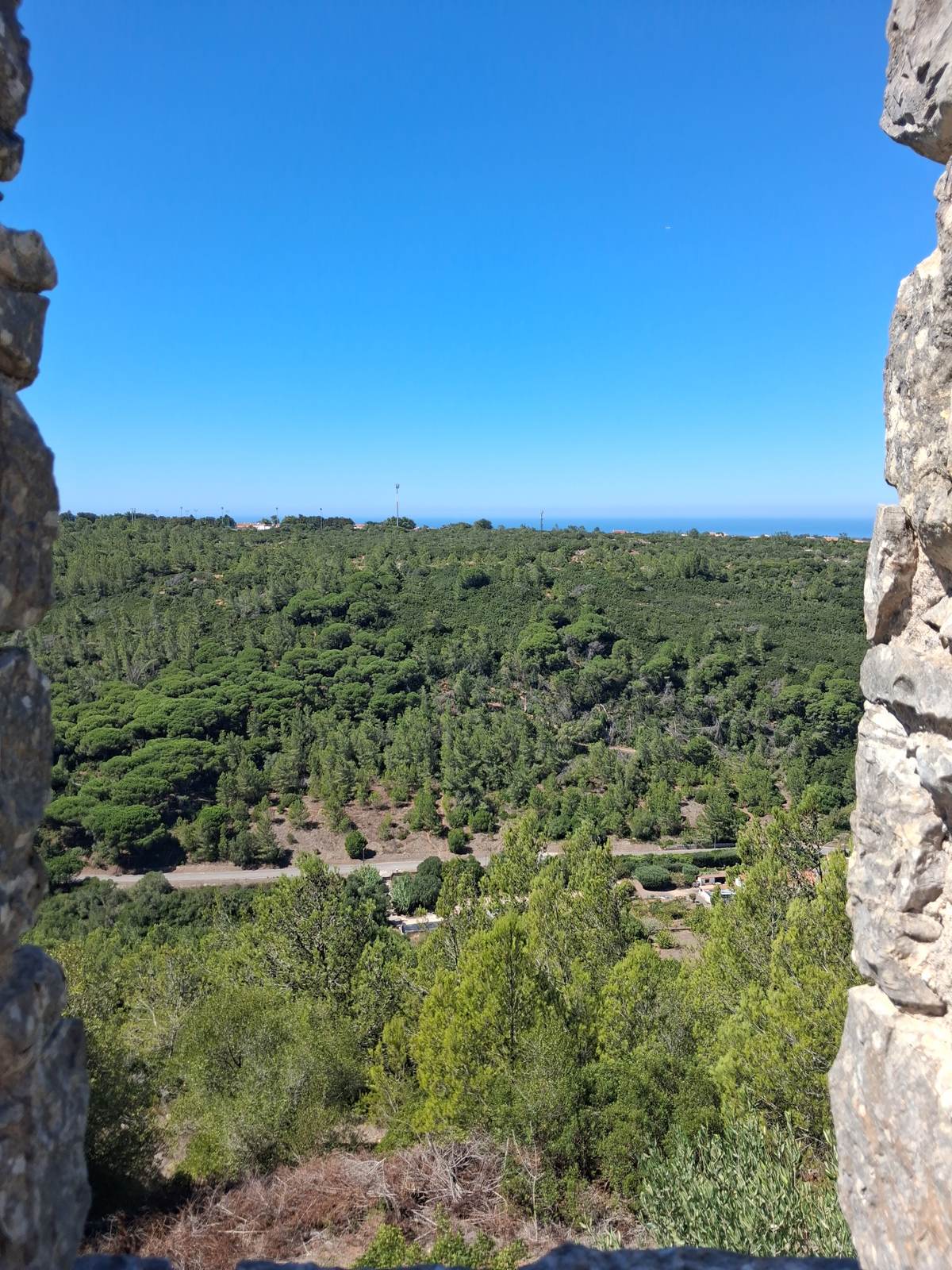
Now turn to the sea. This stretch faces south only, and it is the best view over Sesimbra: the town in its amphitheatre, the Fortress of Santiago down on the beach, the fishing harbour and the Forte do Cavalo closing the point, and the whole bay as far as Cape Espichel. This is where they watched the pirates arrive, and it is where today you watch the fishing boats come in.

Follow the wall-walk towards the cemetery.

The castle cemetery

The castle cemeteryThe castle cemetery
▸Show the text of this stop

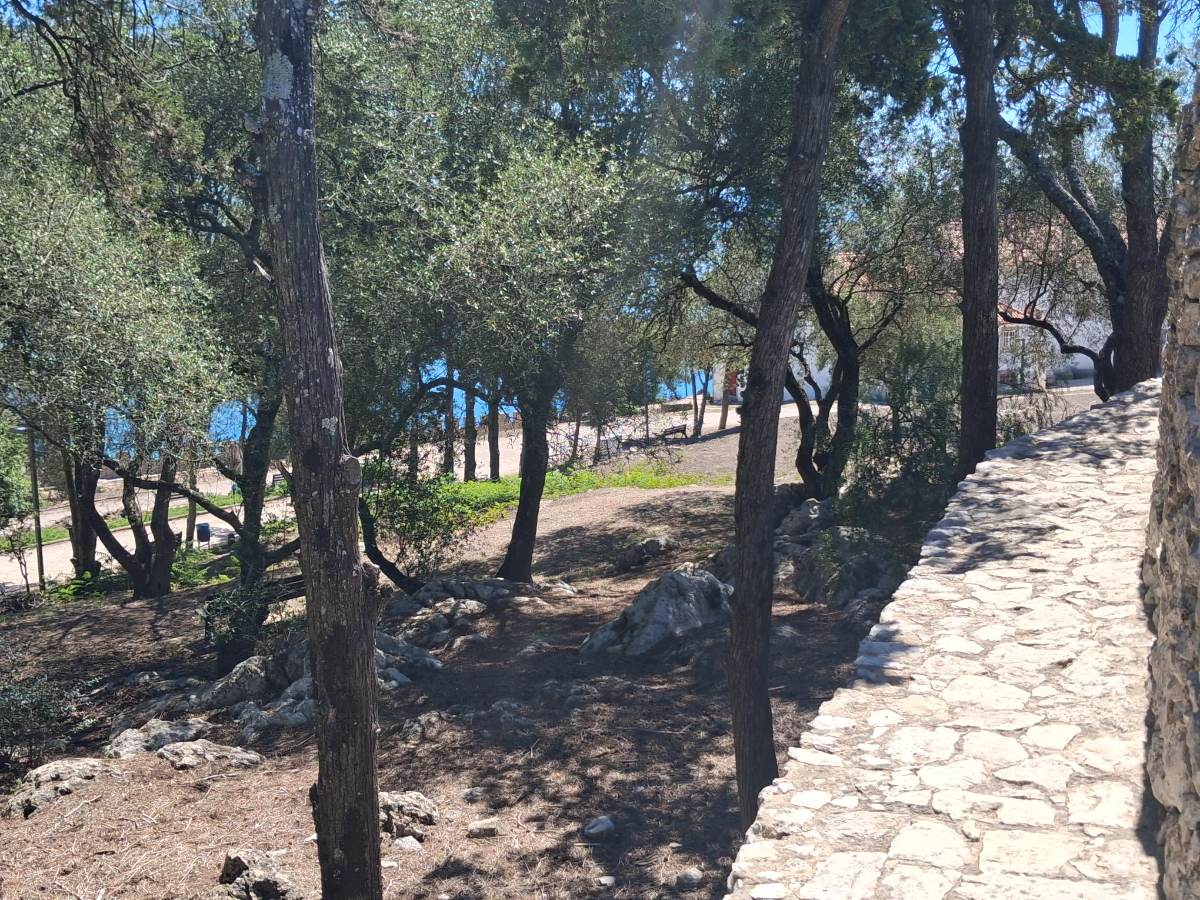
Behind this iron gate lies the castle's old cemetery, no longer in use. Go down the steps from the wall, in through the gate, and cross it slowly, along the central path.

There are no more burials, but the graves remain, and there are families who still come. So we ask you for silence, and no photographs of the graves.

When the town went down to the sea, it left its dead up here, and never moved them. Generations of fishermen, women from the canning factories, boat masters and unknown drowned sailors are buried inside the walls where their ancestors defended themselves from pirates. For centuries this was the only cemetery in Sesimbra.

Look at the cypresses, planted to stand up to the wind and to mark the place from far off: from the sea, the fishermen saw the dark trees up on the castle and knew they were coming home.

On many of the tombs you will see anchors, boats and the same names again and again: the same fishing families, for centuries. On All Souls' Day there are still people who walk up the old path to leave flowers.

It is not a place to linger, but it is the one that best explains this town's relationship with its castle: it is not a monument, it is where the grandparents are.

You come out the other side, heading for the eastern tip of the castle: the bastion.

The bastion

The bastionThe bastionThe bastionThe bastionThe bastion
▸Show the text of this stop

You have reached the bastion, the pointed spur at the eastern end of the castle. Look at the shape: not a round tower, not a square one, but a low, thick triangle facing outwards. That is how you recognise seventeenth-century work, already the age of cannon: medieval walls, tall and thin, shattered under artillery, so military engineers added these earth-filled spurs, built to carry guns. This one never received any: it was built in the middle of the seventeenth century, during the Restoration War against Spain, and the threat passed before the guns arrived. A bastion that never fired.

Sesimbra had four. Two look north, towards the hills and the Azóia road, where armies came overland; two look south, to the bay, where the corsairs and the pirates came. This one closes the eastern corner.

Now look ahead. From here you can see the other half of the bay: Praia da Califórnia below, the slope climbing towards the hills and, to the east, the line of the Arrábida running towards Portinho and Setúbal. On the other side, the town and the Forte do Cavalo closing the western point. Between what you saw from the wall-walk and what you see from here, you have the whole of Sesimbra.

Go back inside the enclosure. Follow alongside the wall, heading north, to the gate you can see between two towers: the Porta do Sol, the Sun Gate.

Porta do Sol — the Sun Gate

Porta do Sol — the Sun GatePorta do Sol — the Sun GatePorta do Sol — the Sun Gate
▸Show the text of this stop

This is the Porta do Sol, the Sun Gate, at the north-eastern end of the castle, squeezed between two towers and a couple of steps from the alcáçova, the quarters of the lord of the castle. It is called that because this is where the sun comes in in the morning.

Contrary to what you might think, this was the main gate of the medieval town. Carts and livestock came through here, and this is where the main street began, running down inside the walls to the church. The Porta da Azóia, which you will see near the end, faced the road; this one faced everyday life.

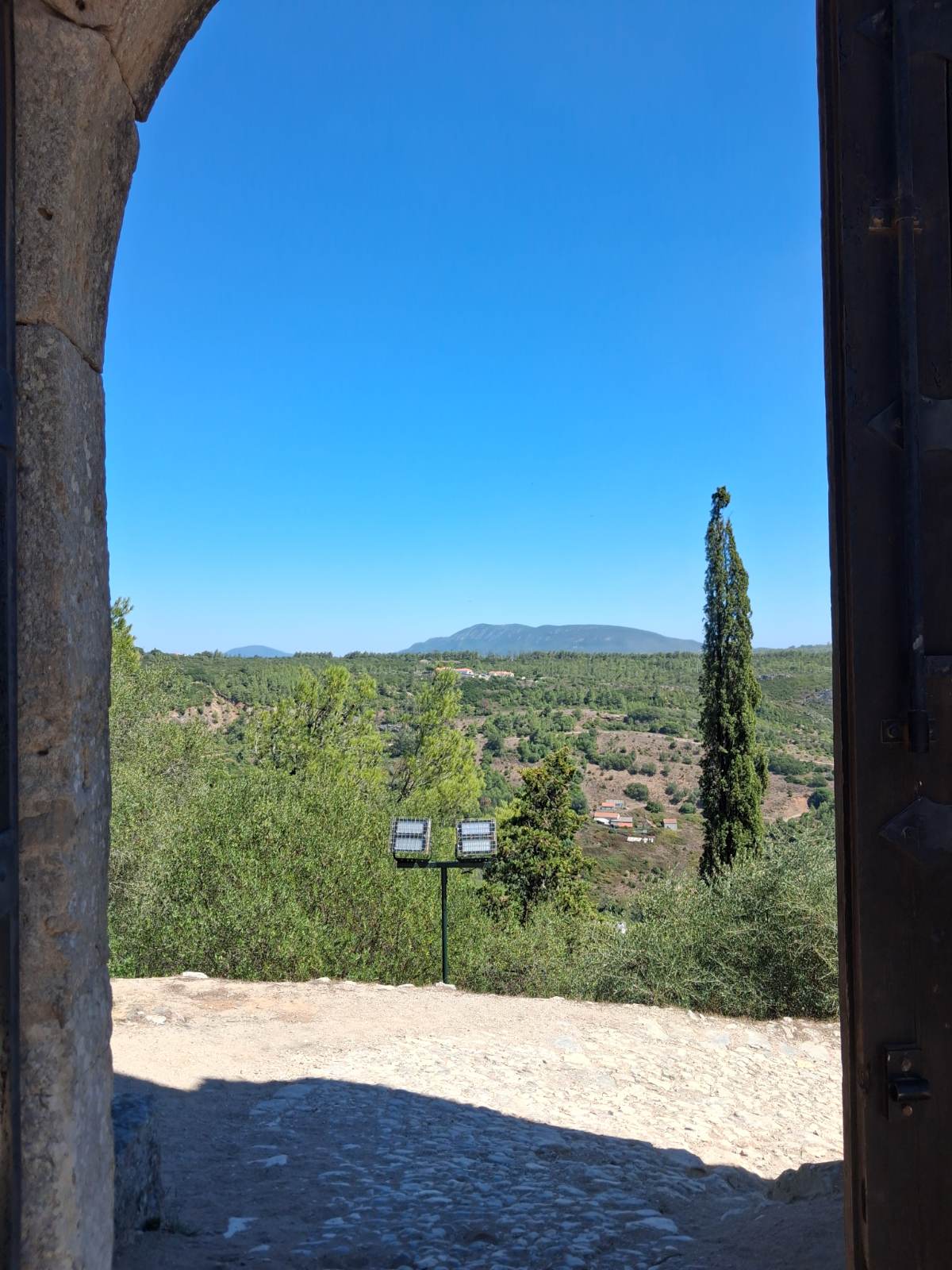
If the gate is open, go through it and turn round: the arch frames the Serra da Arrábida like a picture frame. It is the photograph of the castle. Then come back inside.

A gate between two towers is no accident. Anyone trying to force their way in was trapped in a narrow corridor, with defenders above them on both sides. It was the most vulnerable point in the wall, and therefore the most closely watched.

It is still the gate for those who walk up: the footpath that starts at Valparaíso, down in the town, arrives here after some six hundred metres. If that is how you came, this is the gate you came through.

Follow the path up into the interior, towards the low ruins: the Casa da Vereação, the old town hall.

Casa da Vereação — the town hall

Casa da Vereação — the town hallCasa da Vereação — the town hallCasa da Vereação — the town hall
▸Show the text of this stop

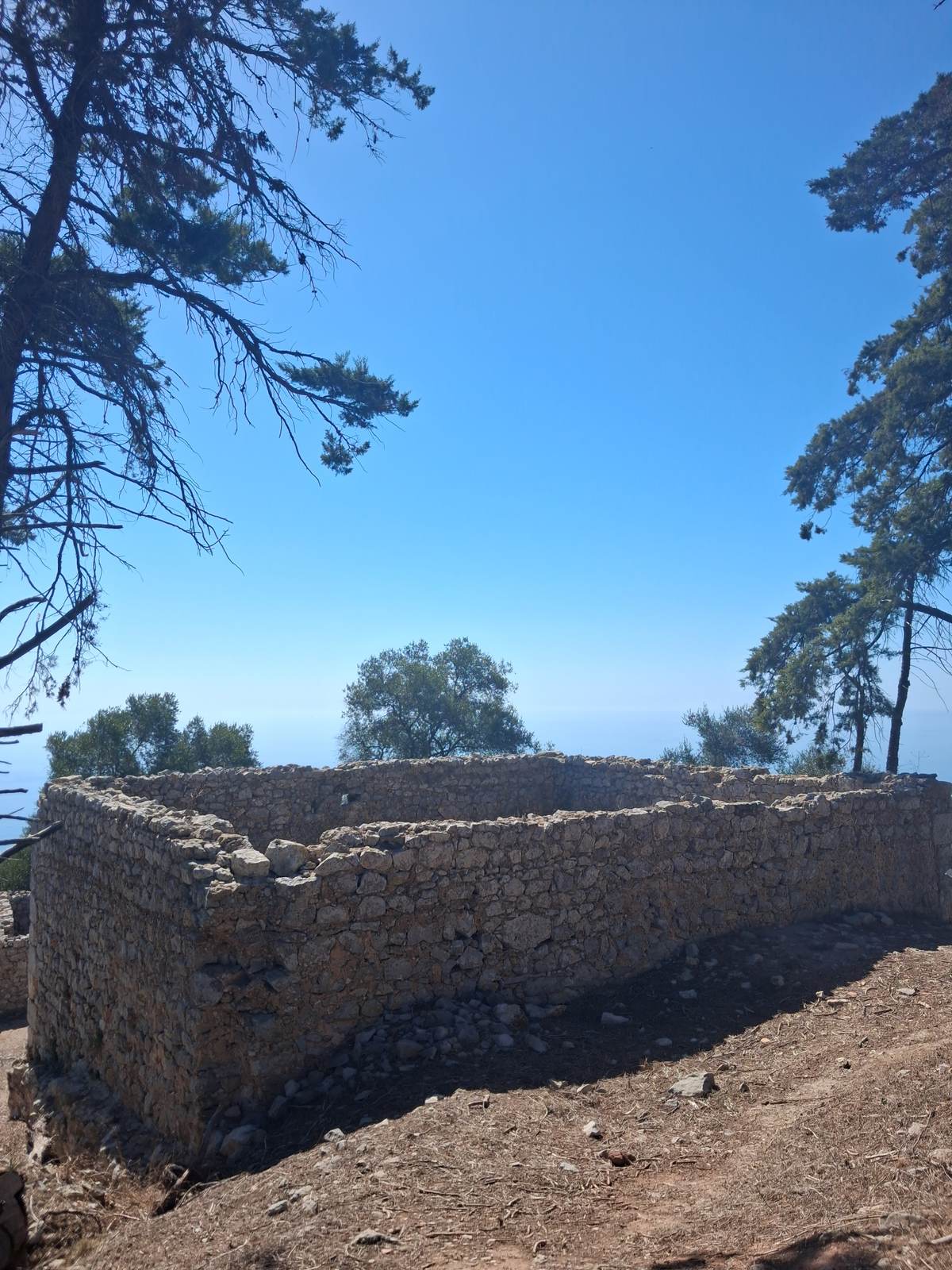
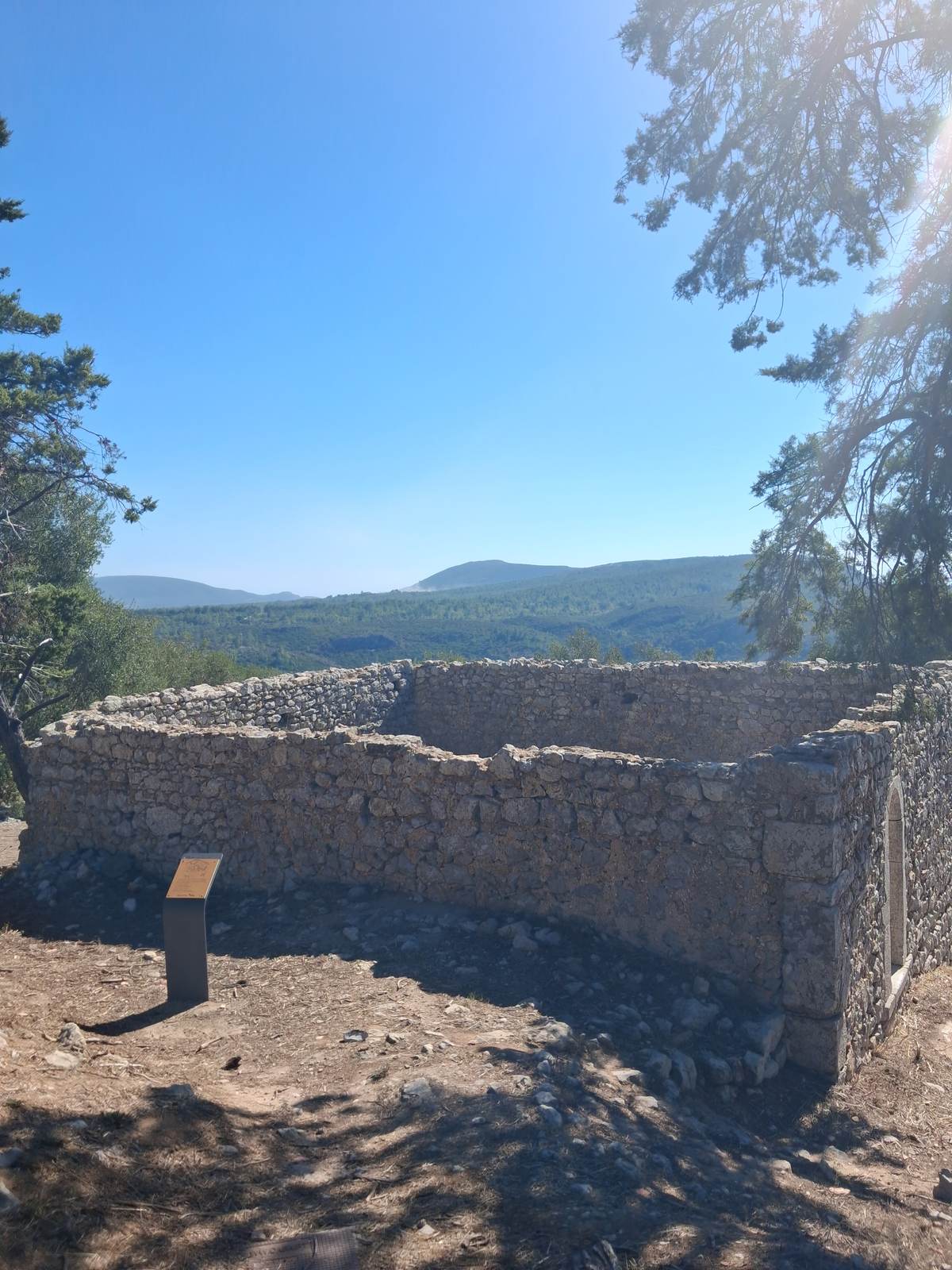
These low walls are what remains of the Casa da Vereação: the town hall of its day. Here the homens-bons, the good men of the town, the councillors, met to decide on taxes, on weights and measures, on the price of bread and on who was allowed to sell what. It was the centre of civil power, in the shadow of military power, which was right next door, in the citadel.

Underneath there was a cistern, no longer visible today. On a high, dry plateau, water was problem number one: rain was collected from the roofs and stored in tanks cut into the rock and lined with mortar. The town had several, and having one under the council chamber says a good deal about who controlled what was most precious.

Notice the scale. This was a whole town inside walls: streets, houses, workshops, a town hall, a church, a butchery. All of it fitted on this plateau, with the sea below and its back to the hills.

When the town moved down to the shore, the council went down with it. The move became official in 1514, with a new charter from Manuel the First, and in 1536, with the founding of the parish of Santiago down below. From then on the castle was left behind: in 1641 a letter by Carlos Pereira Calixto already described it as abandoned and badly decayed. What time did not take, the townspeople did, reusing the stone down below. Only in 1910, when it was listed as a National Monument, and then with the works of the twentieth century, was what still stood made safe.

Walk on a few metres: the next ruins, right beside these, are the açougue, the town butchery.

The açougue — the town butchery

The açougue — the town butcheryThe açougue — the town butcheryThe açougue — the town butchery
▸Show the text of this stop

This was the açougue: the place where the town's animals were kept, slaughtered and sold. Butcher's shop, slaughterhouse and pen, all in the same space, and right next to the town hall. That is no accident: meat was one of the most closely watched trades in a medieval town. The councillors fixed the price, checked the weights and decided who was allowed to cut. Having the butchery at the door of the Casa da Vereação was a way of keeping an eye on it.

Imagine the smell, the noise and the flies, on a plateau where the wind did not always help. The medieval town was no postcard: it was a cramped village, with livestock coming in through the Sun Gate and ending up here.

Notice, too, what you cannot see: there is no trace of large houses. Those who gave the orders lived in the citadel, just up there. The rest of the town lived in houses of dry stone and tile, which vanished without a trace when the population moved outside the walls.

Before you move on, look west: about thirty metres away, in the middle of the plateau, there is a new bench facing the town and the sea. If you want to stop for two minutes, that is the place. It is also from there that you best make out the plan of the old town: the church below, the ruins around you, the wall closing everything in.

Now head for the highest part of the castle: the alcáçova and the keep, ahead of you.

The alcáçova — the citadel

The alcáçova — the citadelThe alcáçova — the citadel
▸Show the text of this stop

You are entering the alcáçova: a castle inside the castle. It is the highest and most enclosed precinct, with a wall of its own, and this is where the alcaide lived with his family. The alcaide was the Order of Santiago's man in Sesimbra, the warrior monks to whom Sancho the Second gave the castle in 1236. He commanded the garrison, collected the rents and answered to the Master of the Order, in Palmela.

The idea is simple: if the outer wall fell, the town took refuge in here and held out for one more siege. So the citadel had everything it needed to hold out on its own, with water in store, a granary and the tallest tower watching over everything.

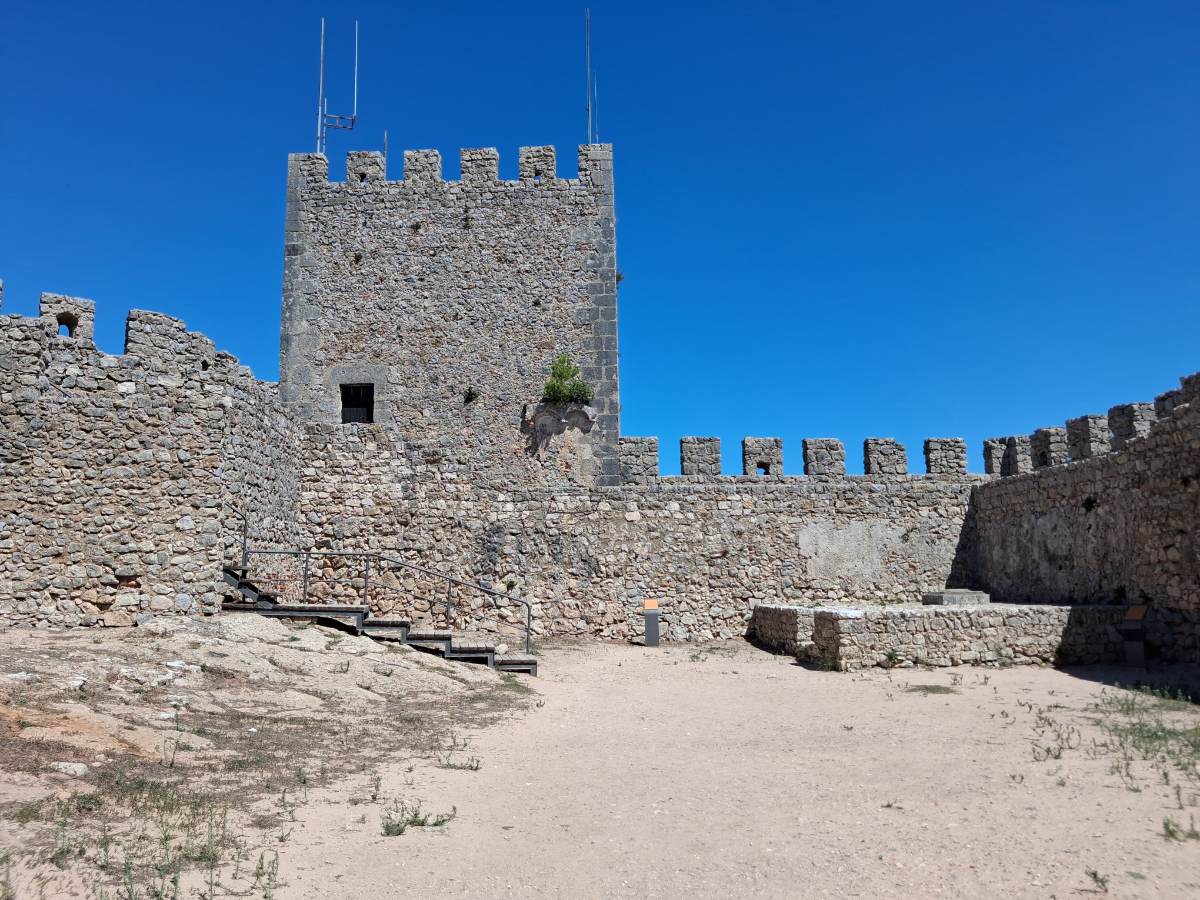
Look around you. Most of the walls you see today are restoration work from the nineteen thirties and forties, but the plan is the medieval one: a courtyard, rooms built against the wall and, in the corner, the keep. Before you reach it, notice the low structure in the middle of the courtyard: the cistern.

The keep and the cistern

The keep and the cisternThe keep and the cisternThe keep and the cisternThe keep and the cisternThe keep and the cisternThe keep and the cistern
▸Show the text of this stop

You are in the courtyard of the alcáçova, at the foot of the keep, the tallest tower in the castle. Before you go up, look at the low structure in the middle: the cistern. Water and watch, side by side: the two things a castle could not do without.

Without water, the tallest wall is worth nothing: three days of thirst will surrender any garrison. The cistern filled in two ways: a channel brought water from a spring, and in the rainy months the roofs and the courtyard drained into it. The walls were lined with waterproof mortar, and a lid kept the water from the sun and the dust. The town had other cisterns, but this was the alcaide's, inside the last stronghold.

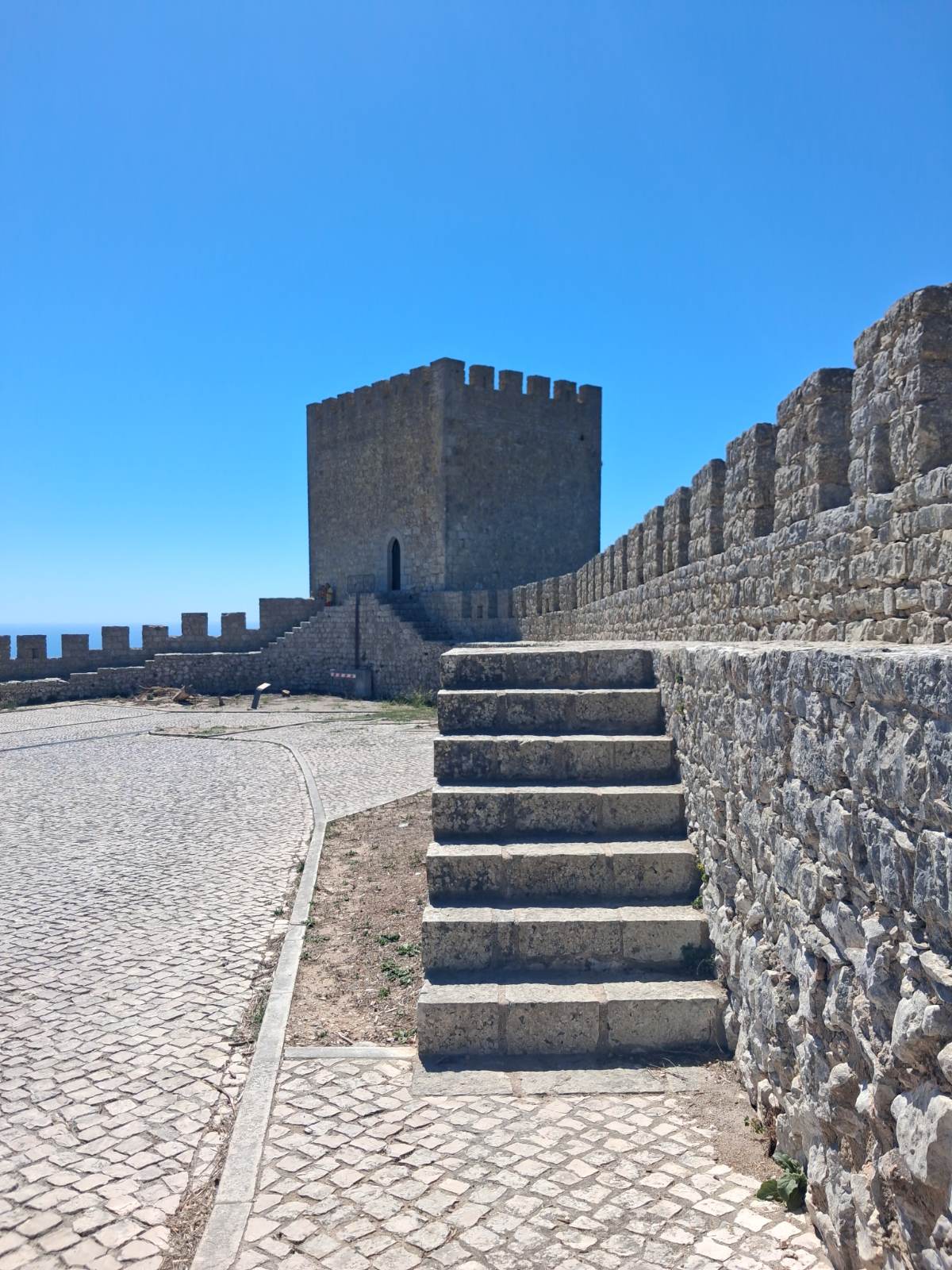
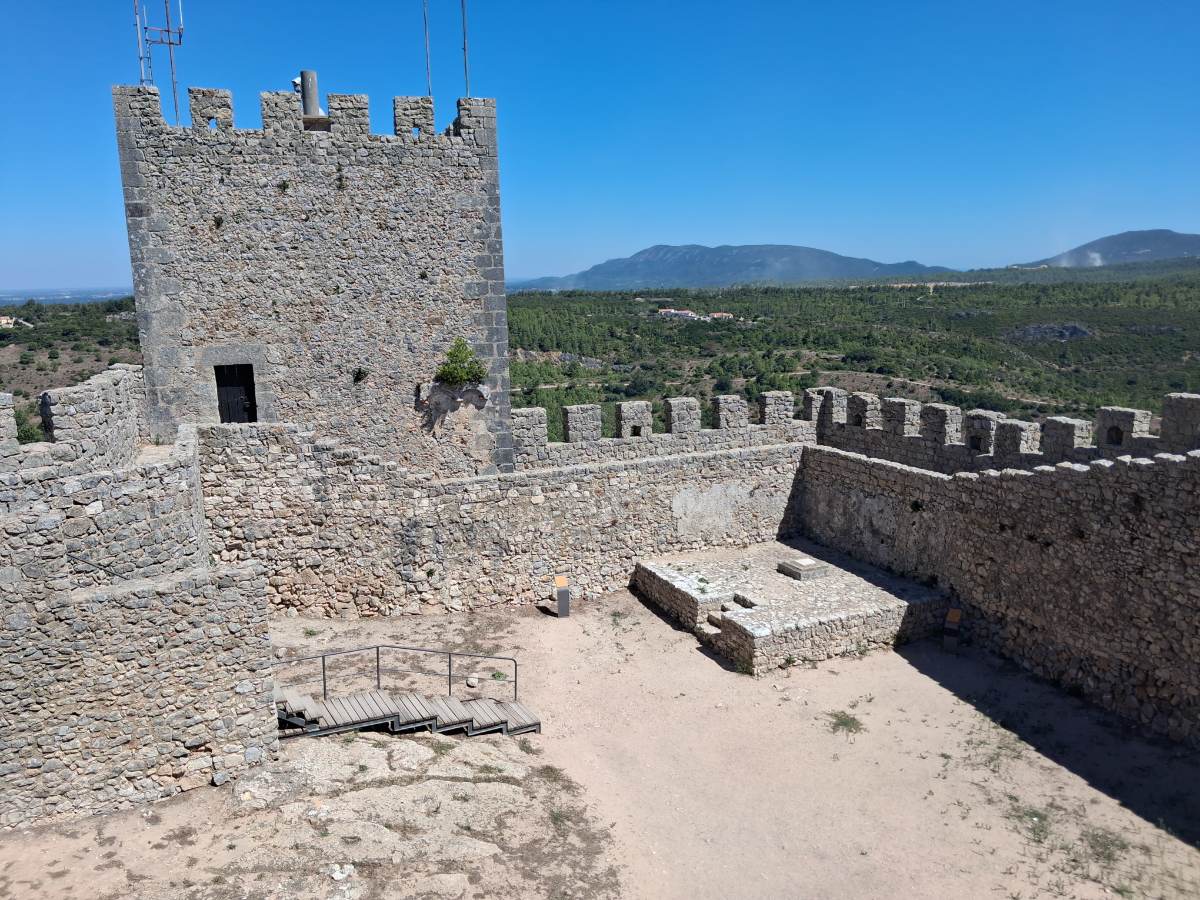
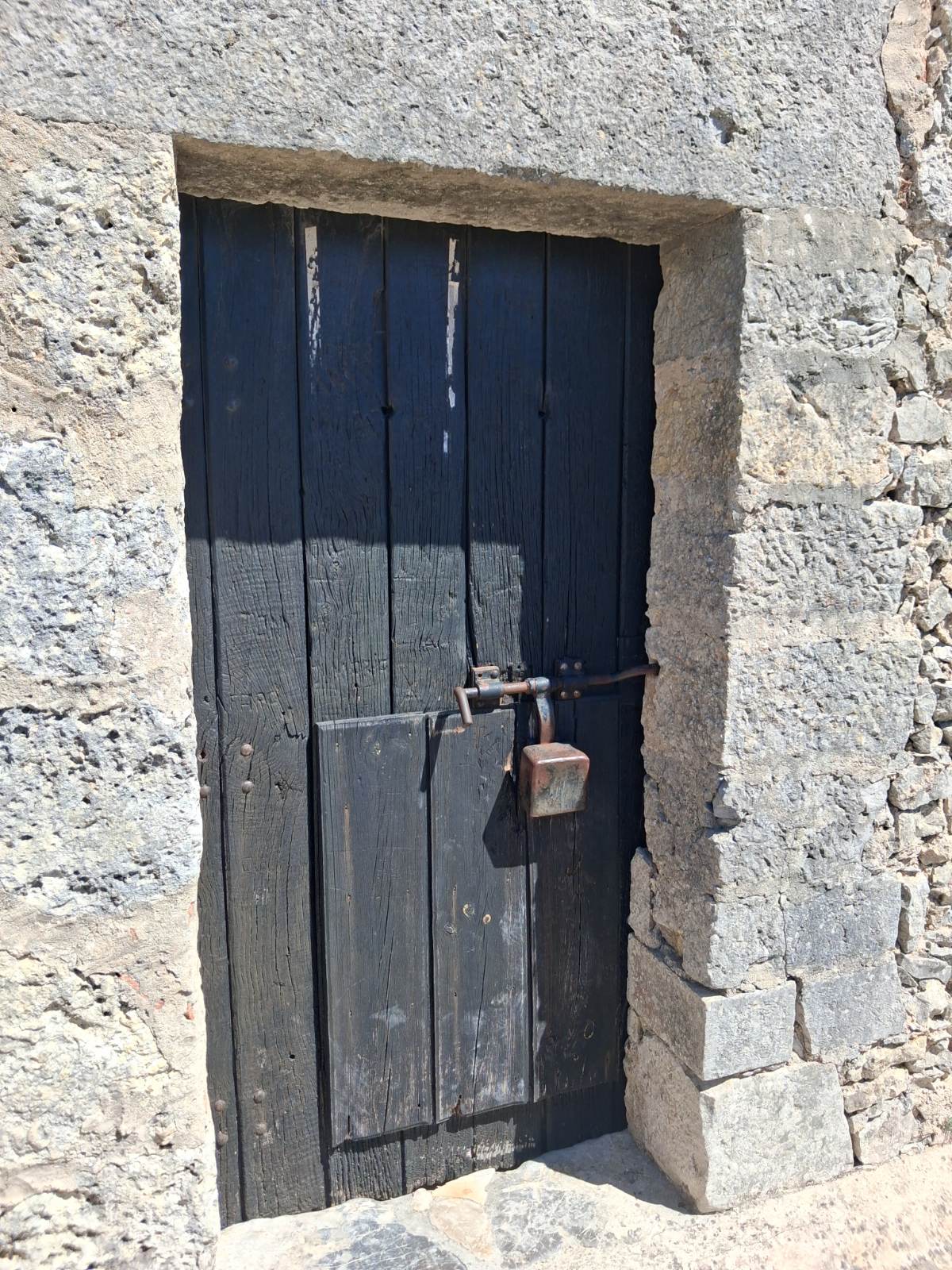
Now climb the steps that lead up to the inner wall. The keep is entered from the wall-walk. Notice: the door is halfway up, at the level of the walkway, and in the Middle Ages even that connection was not guaranteed, there was a wooden gangway that could be pulled away. If the enemy got into the citadel, the tower was left isolated. It was everybody's last refuge.

But the tower was not only for holding out. It was for seeing, and for speaking. From the wall-walk, before you go in, look north: the valley the armies came up by land, and the slopes climbing towards Azeitão. This is what the tower watched. As late as 1366, a document of Pedro the First called this castle vital to the defence of the kingdom. And from here they talked to the other castles of the region, Palmela, Setúbal, Cape Espichel, with fire by night and smoke by day.

If the tower is open, go up: inside there is an exhibition about Sesimbra's royal charter, and from the top you get the castle's only view in every direction, from the hills to the sea.

When you come down, go back into the courtyard and out through the citadel gate. Immediately to your right there are steps up to the north wall. Climb them and follow the wall-walk west: it is the finest stretch of the castle, and the least visited.

North wall-walk and the cubelo

North wall-walk and the cubeloNorth wall-walk and the cubeloNorth wall-walk and the cubeloNorth wall-walk and the cubelo
▸Show the text of this stop

You are on the north wall, walking west, with the valley on your right and the old town on your left. Mind your footing: the stones are uneven, there is no handrail on this stretch, and small children should hold an adult's hand. This is the landward side of the castle, the one that looked out for armies and not for pirates. Between the thirteenth and fourteenth centuries, with Sesimbra now Portuguese, this whole circuit was raised to protect the entire population, and not only the alcaide: the citadel was the refuge of a few, this wall was everybody's.

Notice the round tower standing out from the wall: that is a cubelo. Square towers had a problem: their corners broke easily and created blind angles, where the enemy was safe from the arrows. A round tower has no corners, stands up better and lets you see all around. It appears in Portuguese castles at exactly this period, under King Dinis, the king who rebuilt almost every wall in the country.

Now look north. At your feet, the valley where the road from Azeitão and Lisbon climbed; beyond it, the limestone slopes closing the horizon. On clear days, to the north-west, you can see the Serra de Sintra on the other side of the Tagus. This was the sentries' view: by day, dust on the road; by night, fires on the neighbouring castles.

Follow the wall to the end, where it turns south and drops. You come out beside the car park; the old gate right next to it is the Porta da Azóia.

Porta da Azóia — the west gate

Porta da Azóia — the west gatePorta da Azóia — the west gatePorta da Azóia — the west gate
▸Show the text of this stop

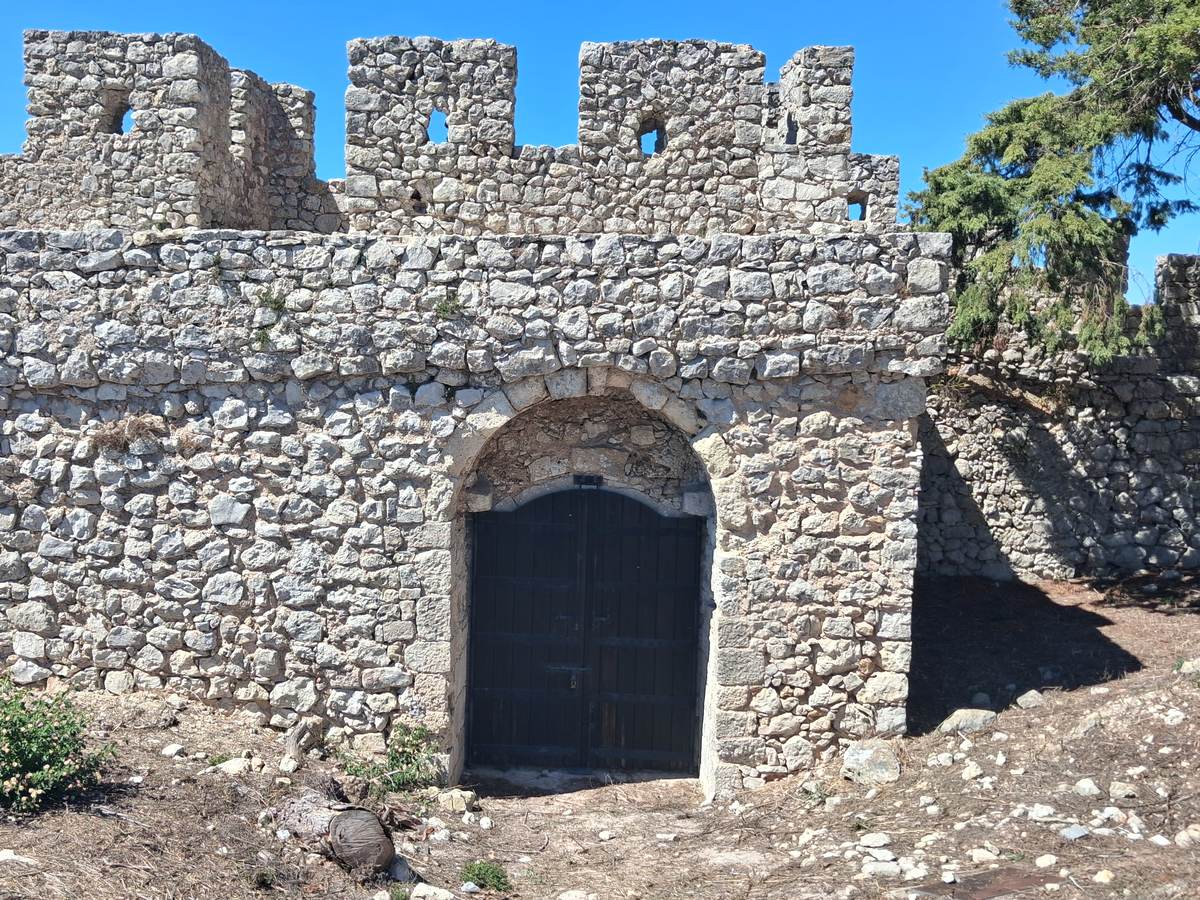
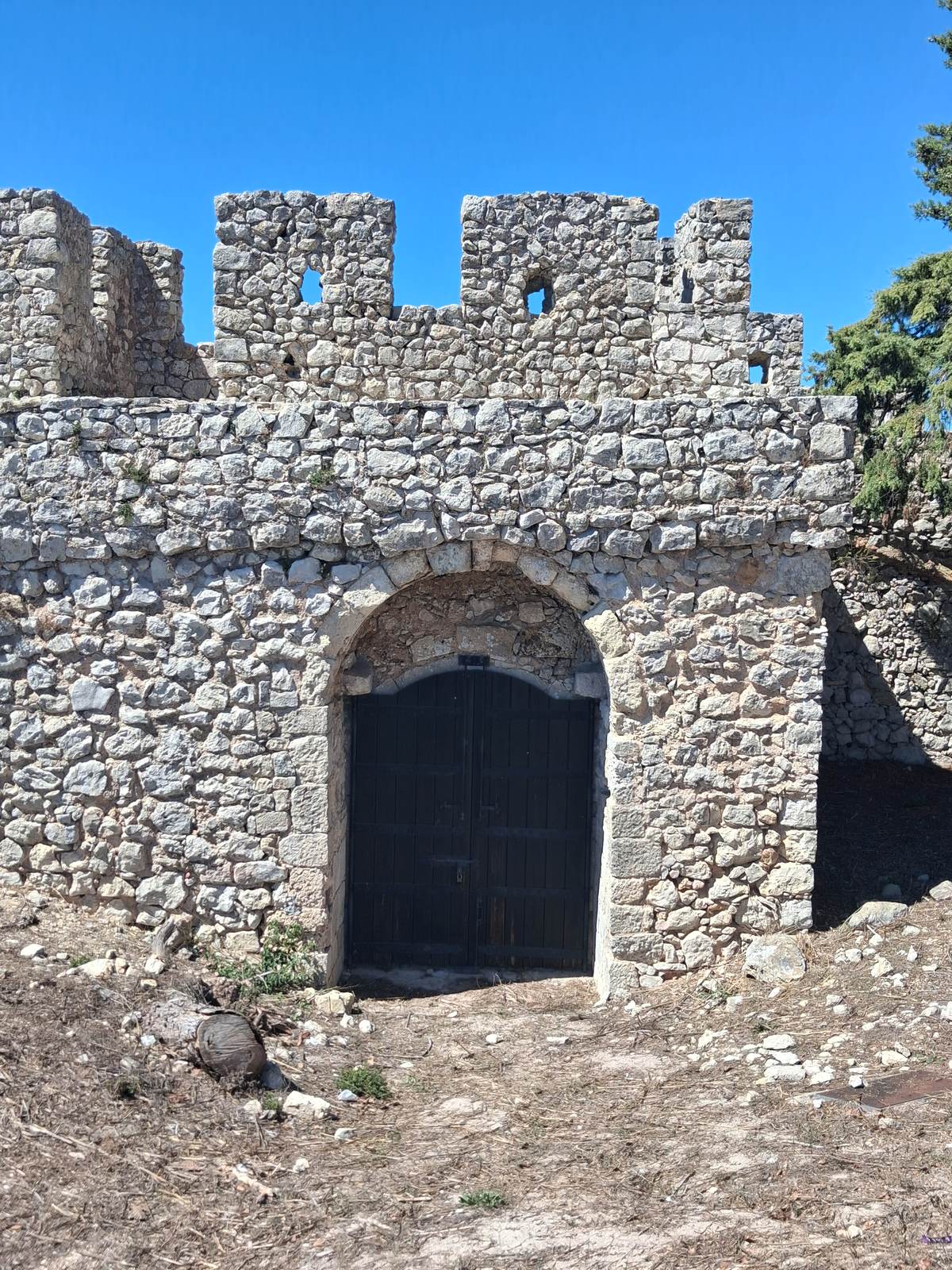
This is the Porta da Azóia, the castle's western gate. It looked out on the road that came from the hills and from Azóia, the village on the way to Cape Espichel, and this is where those who came from far away arrived: pilgrims, merchants, armies. The Sun Gate served everyday life; this one served the world outside.

Look at the arch and at the stones on either side, worn by centuries of passage. For three hundred years, crossing this arch meant entering Sesimbra. Today you drive in through a modern opening a few metres away, and the real gate is all but forgotten.

If you walked up and want to go back down by the footpath, it leaves by the Porta do Sol, on the other side. Two stops to go: carry on inside, a few metres east, to the low ruins against the wall: the olive press.

The olive press

The olive press
▸Show the text of this stop

These ruins are an olive press, and it belonged to the Order of Santiago, the same order that held the castle. That is not a detail: whoever had the press had the oil, and oil was light, food and money. The farmers from the land around brought their olives here, crushed them under a stone wheel turned by arm or by donkey, and pressed the paste. The Order took its share.

Look around and imagine these hills without pine woods: from the thirteenth to the fifteenth century the slopes of the Arrábida were olive groves, vines and grain, all of it climbing towards the castle, which was the centre of everything. The bread pits you saw at the start and this press are the two ends of the same story: storing and transforming what the land gave.

Head for the white church ahead of you: it is the last stop.
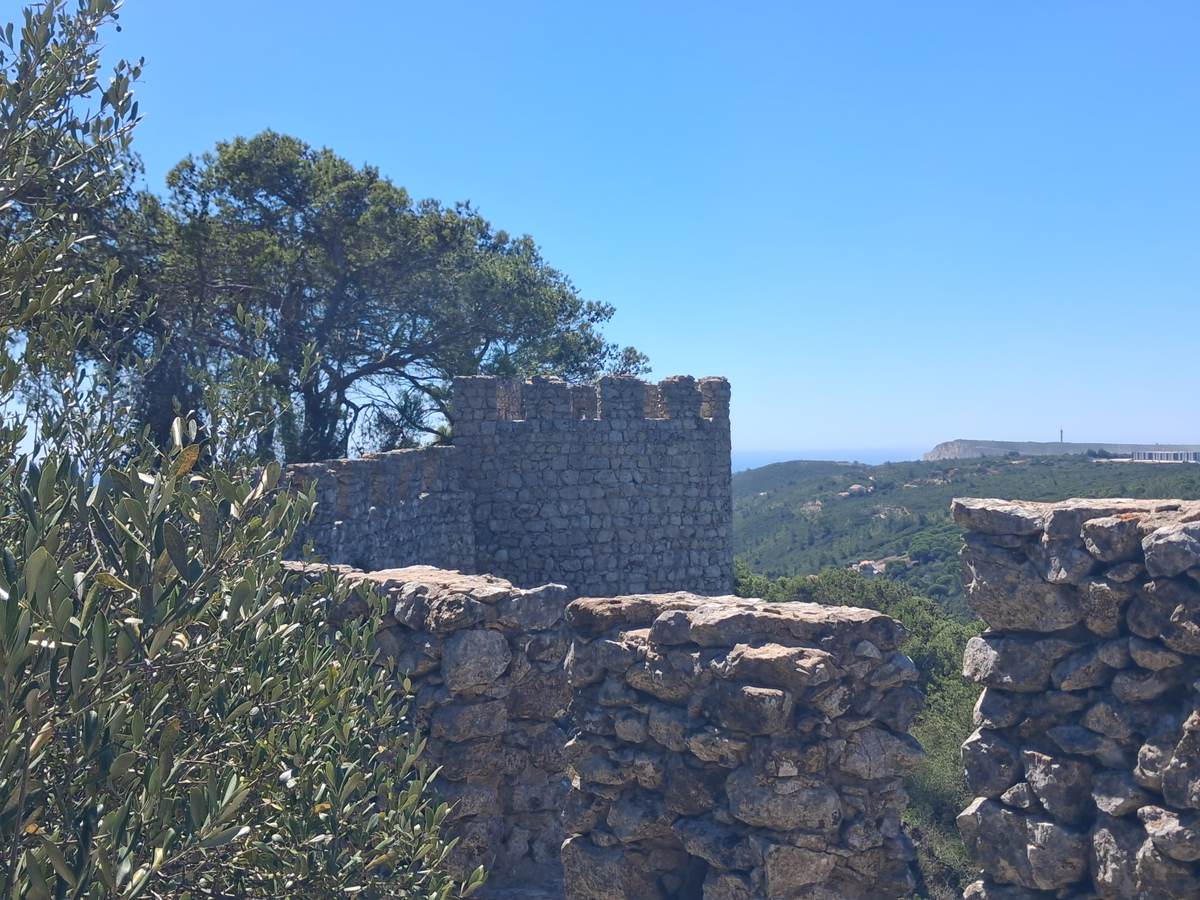
Church of Santa Maria do Castelo — the end

Church of Santa Maria do Castelo — the endChurch of Santa Maria do Castelo — the endChurch of Santa Maria do Castelo — the endChurch of Santa Maria do Castelo — the end
▸Show the text of this stop

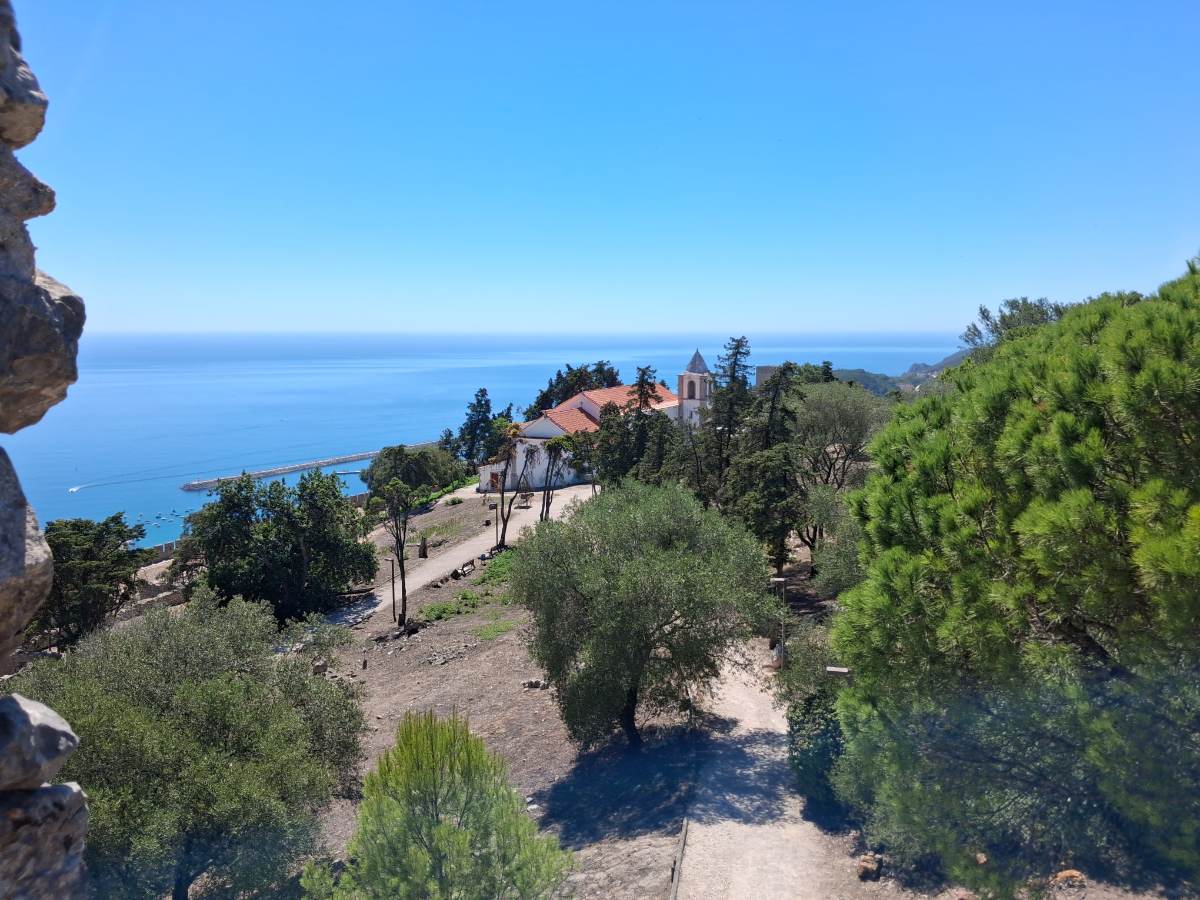
This is the church of Santa Maria do Castelo, the mother church of Sesimbra. It was the town's first parish, when the town was up here, and it went on being so long after everybody had gone down to the shore. That is why it kept being enlarged, in the sixteenth, seventeenth and eighteenth centuries, when almost nobody lived inside the walls any more. In time it changed its name: today it is Nossa Senhora da Consolação do Castelo, and there is still a pilgrimage festival.

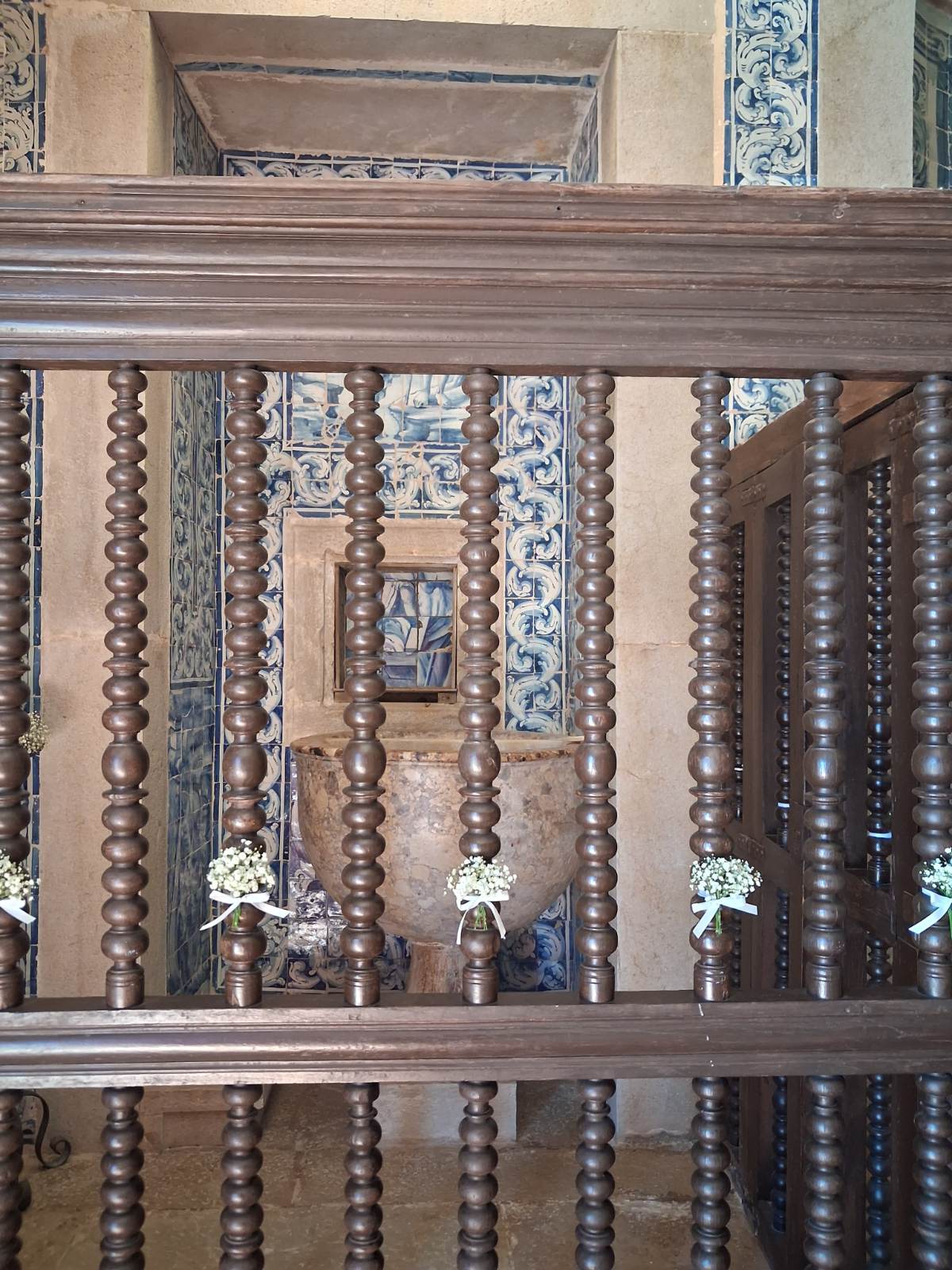
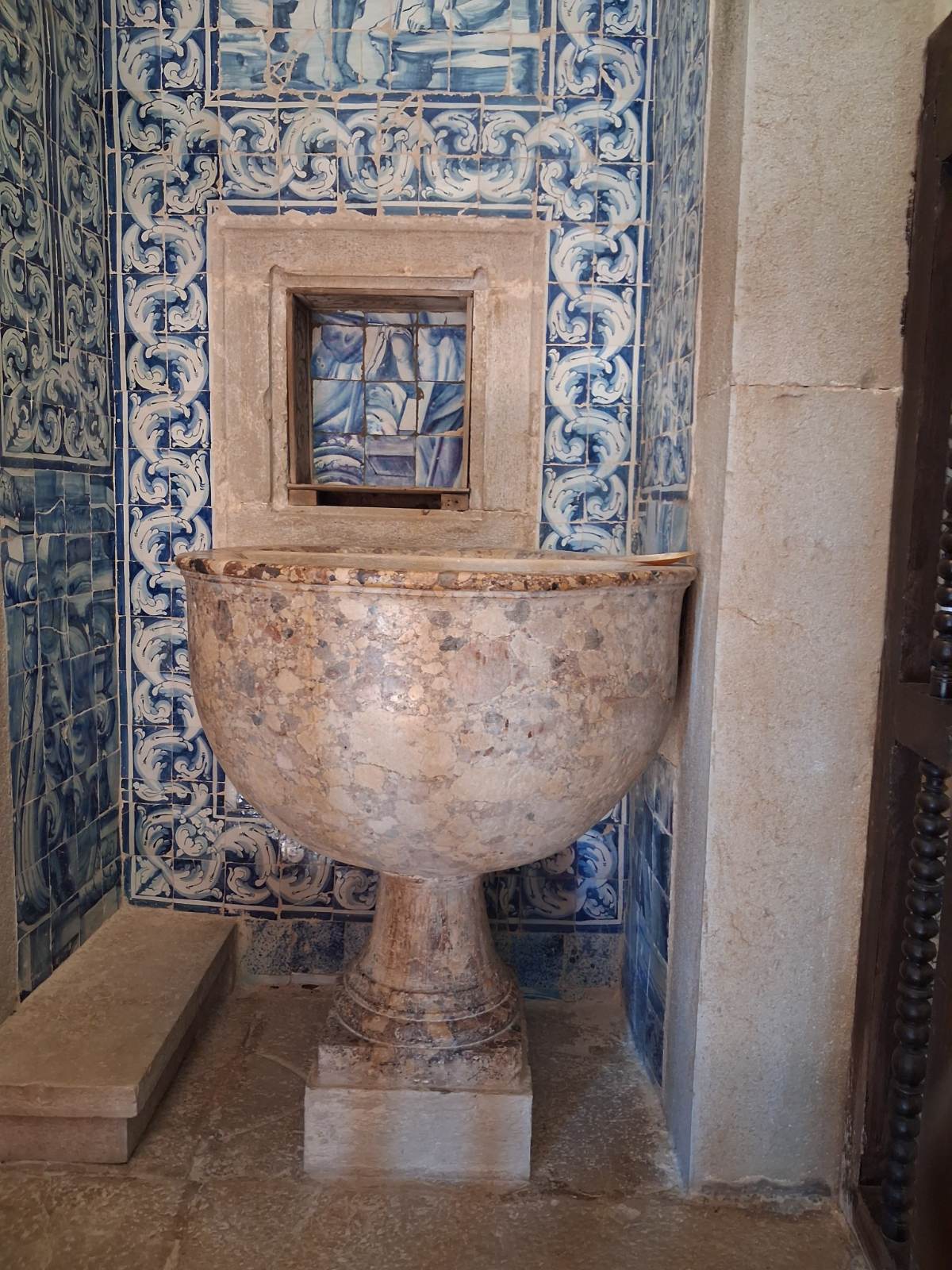
If it is open, go in. Inside, protected but in plain sight, is the baptismal font, and the stone is worth a good look: it is Arrábida Breccia. A stone that exists only here, in these hills, made of coloured fragments bound together by a natural red mortar, some 160 million years ago. It was quarried from Roman times until the nineteen seventies, when the Natural Park closed the quarries, and it reached churches and palaces on three continents. In 2022 the International Union of Geological Sciences listed it as a Global Heritage Stone, one of thirty-two in the whole world. Generations of Sesimbrans were baptised in it.

Notice the simplicity of the façade, white, with the bell tower beside it. This is no cathedral: it is the church of a fishing town, left up here to watch over its dead and its saints.

You have been all the way round the castle. You have seen where the bread and the water were kept, where decisions were made, where people prayed and where they were buried. A complete town on a plateau, which one day went down to the sea and left its memory up here.

The car park is right beside you. The toilets and the Cafetaria de Santiago are behind the church, and next to the café is the tourist office.

And if the hills you saw from the Porta do Sol stayed with you: there is a jeep safari that climbs into the Arrábida from the inside, along tracks no ordinary car reaches. It is on selfguidedtours.pt.

This tour is free and was written by people from Sesimbra. If it helped you see this place differently, you can leave whatever you think fair at selfguidedtours.pt. Thank you for taking this tour with us.

Frequently asked questions

When was Sesimbra Castle built?

It is Moorish in origin, from the ninth century. Afonso Henriques took it in 1165. In 1191, after the Almohad attack, the town was abandoned and the fortress damaged; four years later it was taken back by Frankish settlers, and Sancho I gave Sesimbra its first royal charter in 1201. In 1236 Sancho II handed the town and the castle to the Order of Santiago. The four bastions are seventeenth-century and never received their guns. It has been a National Monument since 16 June 1910 and was restored in the twentieth century. It belongs to the State and has been managed by Sesimbra Town Council since 1940.

Is Sesimbra Castle free? What are the opening hours?

Admission is free. It is open every day, including public holidays: in summer (from the last Sunday in March to the last Saturday in October) from 7am to 8pm, in winter from 7am to 7pm. The grounds are accessible to people with reduced mobility (the wall-walk is not). The Visit Sesimbra tourist office, next to the café, opens 9.30am–1pm and 2.30–5.30pm, except on Mondays. There are toilets and the Cafetaria de Santiago behind the church. For groups and schools, the Municipal Museum runs guided visits by appointment.

How do you get to Sesimbra Castle?

By car, up the castle road, with free parking already inside the walls. On foot, by the footpath that climbs from Valparaíso, in the town, in 20 to 25 minutes (600 m uphill). There is no bus to the castle.

Can you visit Sesimbra Castle as a day trip from Lisbon?

Yes. By car it's about 40 minutes via the Ponte 25 de Abril and the A2 (Sesimbra exit). By bus, Carris Metropolitana runs from Sete Rios to Sesimbra in around 1h05–1h15. The walking tour takes about an hour, so a there-and-back day trip works easily.

What is there to see at the castle?

The walls with the adarve (the wall-walk along the top), the covas do pão (grain silos cut into the rock), the cemetery, the bastion, the Porta do Sol and the Porta da Azóia, the ruins of the Casa da Vereação and of the butchery, the alcáçova with its cistern and keep, the north wall with its round tower, the church of Santa Maria with its baptismal font in Arrábida Breccia, the Order of Santiago's olive press, and the best view over the bay of Sesimbra, Cape Espichel and the Arrábida.

What is Arrábida Breccia?

A stone that exists only in the Serra da Arrábida: coloured fragments of limestone bound together by a natural red mortar, formed some 160 million years ago. It was quarried from Roman times until the nineteen seventies and used in churches and palaces on three continents. In 2022 the International Union of Geological Sciences listed it as a Global Heritage Stone. The baptismal font in the castle church is made of it.

Why does Sesimbra have a castle so far from the sea?

Because Sesimbra was born up here. From the twelfth to the fifteenth century people lived inside the walls, for fear of pirates, and went down to the beach only to fish; they called the town below the Ribeira. The town only moved to the shore in the fifteenth and sixteenth centuries, and the castle was left with the church and the cemetery.

How long does a visit to the castle take?

The full circuit with this audio tour takes about an hour, over 1.6 km, including the climb up the keep. Without stopping to listen, it takes 45 minutes. It is worth doing in the late afternoon, with the light on the bay.
How much does the Sesimbra Castle tour cost?

Nothing. It is free, with no sign-up and no card. In this launch version every tour is free.

Do I need to install an app?

No. When you tap Start, or scan the QR code, the tour opens straight away in your phone's browser, with nothing to install. Allow location and keep the screen on during the tour: that is what makes the audio play by itself at each stop, using GPS.

How long does it take, and where does it start?

About 1 hr · 1.6 km. It starts at the gateway in the wall, next to the car park.

Is it hard? Is it all right for children?

Easy. The adarve, the wall-walk along the top of the rampart, has steps and stretches with no handrail; not suitable for a pushchair. Uneven ground. For whom: families, school groups and day trippers; best in the late afternoon.

How does the audio work?

Allow location when your phone asks. The audio for each stop plays by itself when you get there; you can also tap any stop in the list. Use headphones.

What languages is it available in?

Portuguese, English, Spanish, French, German and Italian. The tour opens in your phone's language.

What should I watch out for?

The adarve, the wall-walk along the top of the rampart, has stretches with no handrail: hold children by the hand. Wind, and little shade. The cemetery is no longer in use, but families still visit it: silence, and no photographs of the graves.

Ready?

Put your headphones on, allow location, and go at your own pace.

Start the tour

Support this tour

This tour is free and was written by people from Sesimbra. If it helped you see this place differently, you can leave whatever you think fair.

Card · Apple Pay / Google Pay · MB Way · Bizum · Pix

Secure card payment — opens in a new page.

The amount paid includes VAT at the legal rate in force (23%).

What next

Other tours

  1. Sesimbra, vila do marA pé · 1h30 · fácil
  2. Grutas e praias selvagensBarco · 2h · fácil
  3. Cabo Espichel: pegadas, lenda e farolA pé · 1h · fácil
  4. Aguncheiras e piscinas naturaisA pé · 3h · médio